
BISOPRON-1.25 Tablet
Bisoprolol Fumarate 1.25 mg Tablets – Cardiac PCD Pharma Franchise, Wholesale Supply & Third Party Manufacturing
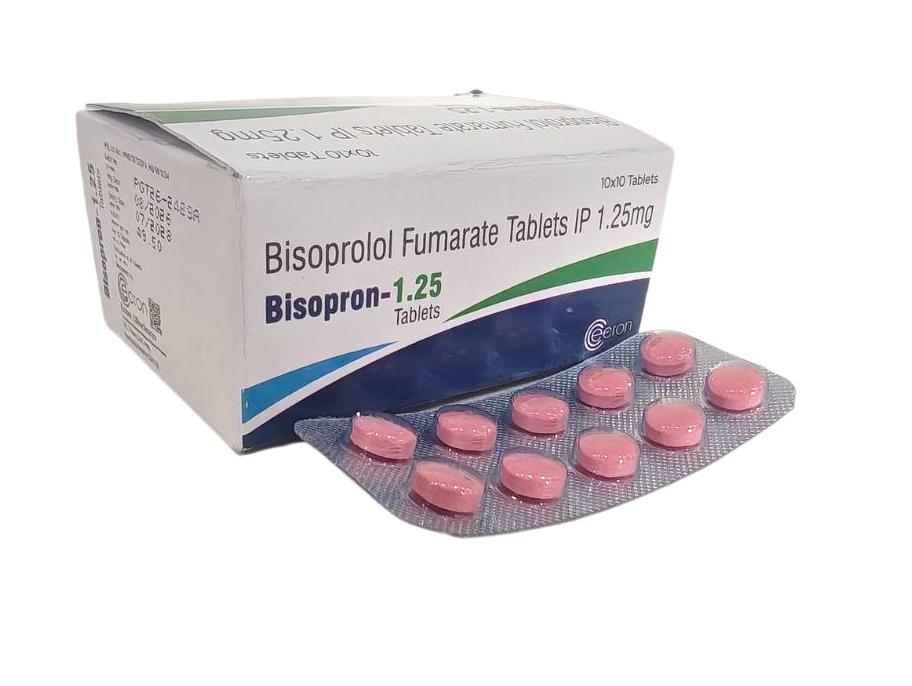
| Composition | Bisoprolol Fumarate IP 1.25 mg |
|---|---|
| Dosage Form | Film-coated Tablet |
| Pack Type | Blister |
| Pack Size | 10 x 10 Tablets |
| MRP | ₹ 495 |
| Therapy | Cardiology – heart failure, hypertension, angina — Beta-1 selective adrenoceptor blocker |
| Storage | Store below 30 °C in a dry place, protected from light and moisture. Keep out of reach of children. |
📱 WhatsApp Enquiry📞 Call: +919041677932
About BISOPRON-1.25 Tablet
BISOPRON-1.25 is bisoprolol fumarate 1.25 mg in a film-coated tablet, packed 10 x 10 in blisters. It is the lowest strength of Trumac Healthcare’s BISOPRON range (1.25, 2.5 and 5 mg, plus bisoprolol-amlodipine combinations), made at WHO-GMP certified partner units for the cardiac PCD franchise and wholesale range.
The 1.25 mg strength exists for one main reason: it is the mandatory starting dose of bisoprolol in chronic heart failure. Guidelines ask for 1.25 mg once daily for a week, then doubling every one to two weeks – 2.5, 3.75, 5, 7.5 – up to the 10 mg target used in the CIBIS-II trial, which cut all-cause mortality by about a third. The same strength serves for cautious up-titration in elderly, hypotensive or bradycardic patients with hypertension or angina.
For cardiac PCD partners, bisoprolol is the most cardioselective of the commonly used beta-blockers and the one cardiologists favour in heart failure, post-MI and in patients with mild airway disease; a full strength ladder in one brand keeps the patient on BISOPRON from initiation to maintenance. It sits with Trumac’s ARBs, statins, antiplatelets and the dapagliflozin and sacubitril-valsartan heart-failure products.
Trumac offers BISOPRON-1.25 on a monopoly PCD pharma franchise for your district, as wholesale stock for cardiac distributors, and with visual aids and product cards. Ask for the cardiac product list and net rates on WhatsApp.
Indications
- Stable chronic heart failure with reduced left-ventricular ejection fraction, as the starting and titration dose in addition to ACE inhibitors or ARNI, diuretics and, where appropriate, SGLT2 inhibitors and mineralocorticoid antagonists
- Hypertension – initiation or titration step in elderly, frail or bradycardia-prone patients (usual maintenance 5–10 mg)
- Chronic stable angina pectoris – low starting dose where heart rate or blood pressure is borderline
- Rate control in sinus tachycardia and after myocardial infarction, on the cardiologist's advice
Mechanism of Action
Bisoprolol is a highly beta-1-selective (cardioselective) adrenoceptor antagonist without intrinsic sympathomimetic activity or membrane-stabilising effect; its beta-1 to beta-2 selectivity ratio is about 75:1, the highest of the oral beta-blockers in routine use, so bronchial and vascular beta-2 receptors are relatively spared at therapeutic doses. Blocking beta-1 receptors in the heart slows the sinus rate, prolongs AV conduction, reduces contractility and lowers myocardial oxygen demand, which relieves angina and controls rate. In heart failure the benefit comes from protecting the failing myocardium from chronic sympathetic over-stimulation: beta-blockade reverses the down-regulation of beta receptors, reduces apoptosis and adverse remodelling, lowers renin release, and reduces sudden arrhythmic death. Because the initial negative inotropic effect can worsen symptoms, treatment must start at 1.25 mg and be increased slowly while the heart adapts. Bisoprolol is well absorbed (bioavailability about 90%), half is cleared unchanged by the kidney and half metabolised in the liver (CYP3A4), giving a balanced clearance that needs no dose change in mild to moderate renal or hepatic impairment; the half-life of 10–12 hours allows once-daily dosing.
Dosage & Administration
Once daily in the morning, with or without food, swallowed with water, as directed by the cardiologist or physician. Chronic heart failure (patient must be stable, with no recent decompensation, on standard therapy): 1.25 mg once daily for one week; if well tolerated increase to 2.5 mg for a week, 3.75 mg for a week, 5 mg for four weeks, 7.5 mg for four weeks, then 10 mg once daily as the maintenance target. After each step the patient's heart rate, blood pressure and symptoms of worsening failure (weight gain, breathlessness, oedema) are reviewed; if a step is not tolerated the dose is reduced to the previous one. Hypertension and angina: usual dose 5–10 mg once daily; 1.25–2.5 mg is used to start in the elderly or in patients with a slow pulse or low blood pressure. Renal impairment with creatinine clearance below 20 ml/min or severe hepatic impairment: do not exceed 10 mg daily. Never stop bisoprolol suddenly, especially in ischaemic heart disease: taper over one to two weeks. If a dose is missed, take it when remembered the same day; do not double up.
Side Effects
Common: tiredness and fatigue (especially at the start), dizziness, headache, cold or numb hands and feet, nausea, vomiting, diarrhoea or constipation, and bradycardia (slow pulse). In heart failure the first weeks may bring a temporary worsening of symptoms – more breathlessness, fluid retention – which is managed by adjusting the diuretic and slowing the titration. Uncommon: sleep disturbances and vivid dreams, depression, worsening of heart failure, AV-conduction disturbance, hypotension on standing, muscle weakness and cramps, bronchospasm in patients with asthma or COPD. Rare: nightmares, hallucinations, allergic rhinitis, reduced tear flow (important for contact-lens wearers), hearing disturbance, hepatitis, raised triglycerides, impotence, and hypersensitivity (itching, flushing, rash). Very rare: conjunctivitis, hair loss, triggering or worsening of psoriasis. Beta-blockers can mask the warning signs of hypoglycaemia (tachycardia, tremor) in diabetics and of thyrotoxicosis.
Contraindications & Precautions
Contraindicated in acute heart failure or episodes of decompensation needing intravenous inotropes, cardiogenic shock, second- or third-degree AV block without a pacemaker, sick-sinus syndrome, sino-atrial block, symptomatic bradycardia (resting heart rate below 60 before treatment), symptomatic hypotension (systolic below 100 mmHg), severe bronchial asthma, severe peripheral arterial occlusive disease or Raynaud's syndrome, untreated phaeochromocytoma, metabolic acidosis and known hypersensitivity to bisoprolol. Precautions: start heart-failure treatment only in a stable patient under specialist supervision and titrate slowly; use with care in bronchospastic disease (bisoprolol is cardioselective but not cardio-specific – a bronchodilator should be available), diabetes with wide glucose swings, strict fasting, ongoing desensitisation therapy, first-degree AV block, Prinzmetal's angina, mild peripheral arterial disease, psoriasis and thyrotoxicosis; in phaeochromocytoma give an alpha-blocker first. Tell the anaesthetist before surgery. Abrupt withdrawal can precipitate angina, infarction or rebound hypertension. Interactions – not recommended: intravenous verapamil or diltiazem (risk of severe hypotension and AV block), class I antiarrhythmics (quinidine, flecainide, propafenone), centrally acting antihypertensives such as clonidine (withdraw bisoprolol first, several days before clonidine); use with caution: class III antiarrhythmics (amiodarone), digoxin and other heart-rate-lowering drugs, dihydropyridine calcium-channel blockers (additive hypotension), insulin and oral hypoglycaemics (masked hypoglycaemia), NSAIDs (reduce antihypertensive effect), anaesthetics, sympathomimetics including adrenaline, rifampicin (lowers bisoprolol levels), and other beta-blocker eye drops. Pregnancy: beta-blockers can reduce placental perfusion and cause fetal bradycardia and hypoglycaemia; use only if clearly necessary and monitor the newborn. Breast-feeding: not recommended. Safety in children is not established.
Storage
Store below 30 °C in a dry place, protected from light and moisture. Keep out of reach of children.
BISOPRON-1.25 Tablet is available for monopoly-based PCD pharma franchise across India and for third-party manufacturing under your brand. WHO-GMP certified, with full visual-aid and promotional support. Become a Trumac franchise partner →
Frequently Asked Questions
Who manufactures bisoprolol 1.25 mg tablets in India for PCD franchise?
BISOPRON-1.25 is made for Trumac Healthcare at WHO-GMP certified partner units and offered on a PCD pharma franchise with monopoly rights for your district. No franchise fee or deposit; first order from ₹25,000.
What is the pack and MRP of BISOPRON-1.25?
10 x 10 tablets in blisters, MRP ₹495. BISOPRON is also available in 2.5 mg and 5 mg. Net rates for franchise partners and wholesalers are shared on WhatsApp.
Is bisoprolol available for PCD franchise on monopoly basis?
Yes. Trumac appoints one partner per district or defined territory for its cardiac division, which includes BISOPRON 1.25, 2.5 and 5 mg, bisoprolol-amlodipine, telmisartan-bisoprolol and the rest of the cardiac range.
Can BISOPRON-1.25 be supplied on wholesale or distributor basis?
Yes. Cardiac distributors and stockists can buy at net rates without a franchise agreement; dispatch within 48 hours of payment from Panchkula.
How do I start a cardiac PCD franchise with Trumac?
Send your district, drug licence number and GST on WhatsApp +91 90416 77932. We confirm availability, share the cardiac product list and net rates, and dispatch the first order with visual aids.
What is BISOPRON-1.25 used for?
Mainly as the starting dose of bisoprolol in chronic heart failure, and as a low starting or titration dose for hypertension and angina in elderly or bradycardia-prone patients.
Why does heart-failure treatment start with such a small dose?
A beta-blocker initially weakens the pumping of a failing heart; starting at 1.25 mg and doubling every one to two weeks lets the heart adapt, so that the long-term benefit – fewer hospitalisations and about a third fewer deaths in the CIBIS-II trial – is reached safely.
How is the dose of bisoprolol increased in heart failure?
1.25 mg for a week, then 2.5, 3.75, 5, 7.5 and finally 10 mg once daily, each step held until the pulse, blood pressure and symptoms are stable; the cardiologist decides the pace.
Can bisoprolol be stopped suddenly?
No. Stopping abruptly can cause rebound angina, a heart attack or a sharp rise in blood pressure; the dose is tapered over one to two weeks.
Is bisoprolol safe in asthma or COPD?
Severe asthma is a contraindication. In mild airway disease bisoprolol, being highly cardioselective, is the beta-blocker most often chosen, under supervision and with a bronchodilator available.
Does bisoprolol affect diabetes?
It can hide the warning signs of low blood sugar (fast pulse, tremor); diabetics on insulin or sulfonylureas should monitor glucose more closely.
Which other cardiac products does Trumac offer for franchise?
BISOPRON 2.5 and 5 mg, bisoprolol-amlodipine (BISOPRON-AM), telmisartan-bisoprolol, metoprolol, atorvastatin and rosuvastatin combinations (ATORCAM, ROSURON), olmesartan-amlodipine (OLMAC-AM), dapagliflozin and the full cardiac-diabetic range, all available to franchise partners alongside BISOPRON-1.25.
Also in this range: BISOPRON-2.5 Tablet – bisoprolol 2.5 mg – the next titration step. Available to the same PCD franchise partners and wholesalers; ask for the combined net-rate list on WhatsApp +91 90416 77932.
Part of the Trumac Healthcare Cardiac medicines list (156 products) – every antihypertensive, statin, antiplatelet, diuretic and heart-failure composition with pack and MRP, all available on monopoly PCD franchise and wholesale supply.