
DICLORUT Tablet
Diclofenac 50 mg + Paracetamol 325 mg Tablets – GP & Ortho PCD Pharma Franchise, Wholesale Supply & Third Party Manufacturing
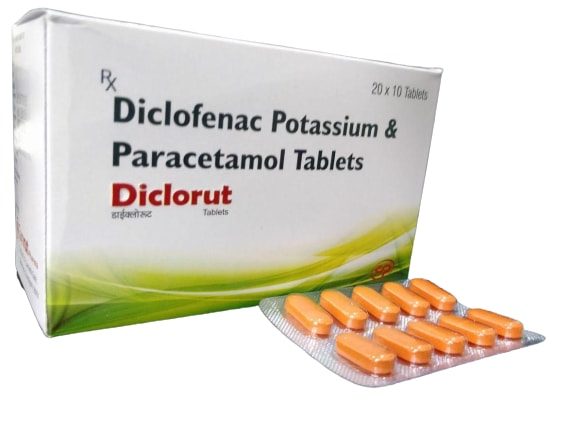
| Composition | Diclofenac Sodium IP 50 mg + Paracetamol IP 325 mg |
|---|---|
| Dosage Form | Tablet |
| Pack Type | Blister |
| Pack Size | 10 x 10 Tablets |
| MRP | On request — contact for PTR/PTS |
| Therapy | General practice / Orthopaedics / Dental – pain and inflammation — NSAID + non-opioid analgesic-antipyretic |
| Storage | Store below 30 °C in a dry place, protected from light and moisture. Keep out of reach of children. |
📱 WhatsApp Enquiry📞 Call: +919041677932
About DICLORUT Tablet
DICLORUT is diclofenac sodium 50 mg with paracetamol 325 mg in one tablet, packed 10 x 10 in blisters. It is the base product of Trumac Healthcare’s DICLORUT range (plain diclofenac 50 and 100 SR, and combinations with serratiopeptidase, chlorzoxazone, dicyclomine and trypsin-chymotrypsin), made at WHO-GMP certified partner units for the general-practice, orthopaedic, dental, gynaecology and ENT PCD franchise and wholesale range.
Diclofenac plus paracetamol is India’s most dispensed painkiller combination: the NSAID brings strong anti-inflammatory and analgesic action for musculoskeletal pain, and paracetamol adds a central analgesic and antipyretic effect through a different pathway, so the pair relieves pain better than either alone at a lower NSAID dose. Every general practitioner, orthopaedic surgeon, dentist and gynaecologist prescribes it for sprains, back pain, arthritis flares, dental extraction, dysmenorrhoea and post-operative pain.
For PCD partners, a diclofenac-paracetamol tablet is a volume driver that every chemist stocks and reorders weekly, and the entry point to the wider DICLORUT family. Trumac prices it to compete with established brands while offering the franchise partner monopoly rights and a full supporting range of ointments, gels, serratiopeptidase and muscle-relaxant combinations.
Trumac offers DICLORUT on a monopoly PCD pharma franchise for your district, as wholesale stock for distributors, and with visual aids and product cards. Ask for the general-range product list and net rates on WhatsApp.
Indications
- Short-term relief of acute musculoskeletal pain and inflammation – sprains, strains, low-back pain, sports injuries and soft-tissue rheumatism
- Painful flares of osteoarthritis, rheumatoid arthritis and ankylosing spondylitis, and acute gout
- Dental pain and pain after tooth extraction or oral surgery
- Post-operative and post-traumatic pain and swelling
- Primary dysmenorrhoea and other acute pain with an inflammatory component, as advised by the doctor
Mechanism of Action
Diclofenac is a phenylacetic-acid non-steroidal anti-inflammatory drug that inhibits cyclo-oxygenase-1 and -2, the enzymes that convert arachidonic acid into prostaglandins; with less prostaglandin E2 and prostacyclin at the site of injury there is less vasodilatation, oedema, sensitisation of pain nerve endings and fever, and diclofenac additionally reduces intracellular arachidonic acid, inhibits the lipoxygenase pathway (less leukotriene formation) and the thromboxane-prostanoid receptor, and has a central analgesic action. Paracetamol has little anti-inflammatory effect in the periphery but is a potent analgesic and antipyretic acting mainly in the central nervous system, where it inhibits the COX enzymes in an environment of low peroxide, activates descending serotonergic pain-inhibiting pathways, and – through its metabolite AM404 – acts on cannabinoid and TRPV1 receptors. Because the two drugs relieve pain through different mechanisms their effects are additive, and the combination allows adequate analgesia at a moderate diclofenac dose. Diclofenac is absorbed quickly, peaks in 1–2 hours and persists in synovial fluid longer than in plasma; paracetamol peaks in 30–60 minutes. Both are metabolised in the liver, diclofenac by CYP2C9 and paracetamol by glucuronidation and sulfation with a small fraction through CYP2E1 to the toxic metabolite NAPQI, which glutathione neutralises at therapeutic doses.
Dosage & Administration
Adults, as directed by the physician: one tablet two or three times a day after food, with a full glass of water, at the lowest effective dose for the shortest period needed to control symptoms – usually 3–5 days for acute pain and not more than 7–10 days without review. Do not exceed three tablets (diclofenac 150 mg, paracetamol 975 mg) in 24 hours, and do not take other paracetamol-containing products at the same time (total paracetamol must stay below 3–4 g a day). Elderly and patients with renal, hepatic or cardiovascular risk: use the lowest dose, monitor, and consider a gastro-protective drug (a proton-pump inhibitor) during NSAID use. Not for children under 14 years. For chronic arthritis the doctor will usually move the patient to plain diclofenac or another regimen rather than continuing the combination long term.
Side Effects
Diclofenac – common: dyspepsia, abdominal pain, nausea, diarrhoea, flatulence, loss of appetite, headache, dizziness, rash, raised liver enzymes; uncommon to rare: gastric or duodenal ulcer with bleeding or perforation (risk rises with dose, duration, age, previous ulcer, alcohol, corticosteroids, anticoagulants, SSRIs), gastrointestinal bleeding (black stools, vomiting blood), hypertension, fluid retention and oedema, worsening of heart failure, and with longer courses a small increase in the risk of myocardial infarction and stroke; acute kidney injury, interstitial nephritis and renal papillary necrosis, especially in dehydrated or elderly patients and with ACE inhibitors or diuretics; hepatitis; bronchospasm in aspirin-sensitive asthmatics; hypersensitivity reactions including urticaria, angioedema and anaphylaxis; serious skin reactions (Stevens–Johnson syndrome, toxic epidermal necrolysis, DRESS); blood dyscrasias; aseptic meningitis in lupus patients. Paracetamol – rare: allergic rash, blood dyscrasias; overdose or regular use above the maximum dose (including through other paracetamol-containing products, or with alcohol, malnutrition or enzyme-inducing drugs) causes acute liver failure, which can be fatal and whose symptoms appear only after 24–48 hours. Report at once: black or bloody stools, vomiting blood, severe stomach pain, swelling of the face or breathing difficulty, yellowing of the skin, very little urine, or a spreading rash with blisters.
Contraindications & Precautions
Contraindicated in known hypersensitivity to diclofenac, paracetamol or any excipient; in patients in whom aspirin or other NSAIDs precipitate asthma, urticaria, rhinitis or angioedema; active or recurrent peptic ulcer or gastrointestinal bleeding (two or more episodes), or a history of NSAID-related bleeding or perforation; severe hepatic, renal or cardiac failure; established congestive heart failure (NYHA II–IV), ischaemic heart disease, peripheral arterial disease or cerebrovascular disease; treatment of peri-operative pain in coronary artery bypass surgery; the third trimester of pregnancy; and children under 14. Precautions: use the lowest dose for the shortest time; elderly patients and those with a history of ulcer, inflammatory bowel disease, hypertension, fluid retention, renal impairment, hepatic impairment or porphyria need care and monitoring; NSAIDs may mask fever and infection; stop at the first sign of rash or hypersensitivity; dehydration and concurrent diuretics or ACE inhibitors raise the risk of kidney injury; diclofenac can reduce female fertility and should be withdrawn in women having difficulty conceiving; avoid in the first and second trimesters unless clearly needed, and in breast-feeding use only on medical advice. Paracetamol: hepatic impairment, chronic alcohol use, malnutrition and dehydration lower the safe dose; glucose-6-phosphate dehydrogenase deficiency (rare haemolysis). Interactions: other NSAIDs and aspirin (additive GI toxicity – avoid), anticoagulants and antiplatelets (bleeding; paracetamol also potentiates warfarin with regular use), corticosteroids and SSRIs (GI bleeding), ACE inhibitors, ARBs and diuretics (reduced effect, renal failure), lithium, digoxin and methotrexate (raised levels), ciclosporin and tacrolimus (nephrotoxicity), quinolone antibiotics (convulsions), sulfonylureas (hypoglycaemia), zidovudine, phenytoin, potassium-sparing diuretics (hyperkalaemia), CYP2C9 inhibitors such as voriconazole (raised diclofenac levels), enzyme inducers (rifampicin, carbamazepine, phenytoin, isoniazid – increased paracetamol hepatotoxicity), metoclopramide and domperidone (faster paracetamol absorption), cholestyramine (slower), and alcohol.
Storage
Store below 30 °C in a dry place, protected from light and moisture. Keep out of reach of children.
DICLORUT Tablet is available for monopoly-based PCD pharma franchise across India and for third-party manufacturing under your brand. WHO-GMP certified, with full visual-aid and promotional support. Become a Trumac franchise partner →
Frequently Asked Questions
Who manufactures diclofenac + paracetamol tablets in India for PCD franchise?
DICLORUT is made for Trumac Healthcare at WHO-GMP certified partner units and offered on a PCD pharma franchise with monopoly rights for your district. No franchise fee or deposit; first order from ₹25,000.
What is the pack and price of DICLORUT?
10 x 10 tablets in blisters; the MRP and net rate are shared on WhatsApp because this is a price-competitive volume product. The range also has DICLORUT-50, DICLORUT-100 SR, DICLORUT-SP (with serratiopeptidase), DICLORUT-MR (with chlorzoxazone), DICLORUT-SPAS (with dicyclomine) and DICLORUT-XL (with trypsin-chymotrypsin).
Is diclofenac-paracetamol available for PCD franchise on monopoly basis?
Yes. Trumac appoints one partner per district or defined territory for its general-practice and orthopaedic divisions, which include the whole DICLORUT family, aceclofenac combinations, etoricoxib, gels and ointments.
Can DICLORUT be supplied on wholesale or distributor basis?
Yes. Distributors and stockists can buy at net rates without a franchise agreement; dispatch within 48 hours of payment from Panchkula.
How do I start a GP or ortho PCD franchise with Trumac?
Send your district, drug licence number and GST on WhatsApp +91 90416 77932. We confirm availability, share the product list and net rates, and dispatch the first order with visual aids.
What is DICLORUT used for?
Short-term relief of pain and swelling from sprains, back pain, arthritis flares, dental procedures, injuries, surgery and period pain.
How is DICLORUT taken?
One tablet two or three times a day after food with water, for a few days, never more than three tablets in 24 hours, and not together with other paracetamol-containing medicines.
Why combine diclofenac with paracetamol?
They relieve pain by different mechanisms – diclofenac reduces inflammation at the site of injury and paracetamol acts in the central nervous system – so together they give better relief than either drug alone at a moderate NSAID dose.
Who should not take DICLORUT?
People with a stomach ulcer or bleeding, asthma triggered by painkillers, heart disease, heart failure, severe kidney or liver disease, women in the last three months of pregnancy, and children under 14.
Can DICLORUT be taken for a long time?
No. It is meant for short courses; long-term NSAID use raises the risk of stomach bleeding, kidney damage and heart problems, and chronic pain needs a doctor's plan.
What are the warning signs to report?
Black or bloody stools, vomiting blood, severe stomach pain, swelling of the face or wheezing, yellow skin or eyes, very little urine, or a rash with blisters.
Which other pain products does Trumac offer for franchise?
DICLORUT-SP, DICLORUT-MR, DICLORUT-SPAS, DICLORUT-XL, DICLORUT-100 SR, aceclofenac-paracetamol and aceclofenac-serratiopeptidase tablets, etoricoxib, tramadol-paracetamol, diclofenac gel and the ortho range, all available to franchise partners alongside DICLORUT.
Same composition, second brand: DICOFER Tablet – diclofenac 50 mg + paracetamol 325 mg. Both brands are supplied to PCD franchise partners and wholesalers; ask on WhatsApp +91 90416 77932 which one is free for your district.
Part of the Trumac Healthcare Painkiller tablets list (104 products) – every oral and injectable painkiller, NSAID and muscle-relaxant combination with pack and MRP, all available on monopoly PCD franchise and wholesale supply.