
METORON-25 Tablet
Metoprolol Succinate 25 mg Extended-Release Tablets – Cardiac PCD Pharma Franchise, Wholesale Supply & Third Party Manufacturing
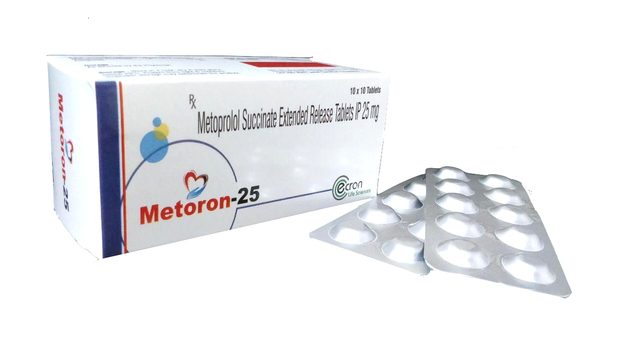
| Composition | Metoprolol Succinate IP equivalent to Metoprolol Tartrate 25 mg (extended release) |
|---|---|
| Dosage Form | Extended-release Tablet |
| Pack Type | Alu-Alu blister |
| Pack Size | 10 x 10 Tablets |
| MRP | ₹ 470 |
| Therapy | Cardiology – hypertension, angina, heart failure, post-MI — Beta-1 selective adrenoceptor blocker (extended release) |
| Storage | Store below 30 °C in a dry place, protected from light and moisture. Keep out of reach of children. |
📱 WhatsApp Enquiry📞 Call: +919041677932
About METORON-25 Tablet
METORON-25 is metoprolol succinate 25 mg in an extended-release tablet, packed 10 x 10 in Alu-Alu blisters. It is the lowest strength of Trumac Healthcare’s METORON range (12.5, 25, 50 and 100 mg, plus the metoprolol-chlorthalidone and telmisartan-metoprolol combinations), made at WHO-GMP certified partner units for the cardiac PCD franchise and wholesale range.
Metoprolol succinate is the extended-release, once-daily form of the world’s most prescribed cardioselective beta-blocker, and the only beta-blocker besides bisoprolol and carvedilol with a mortality benefit proven in heart failure (MERIT-HF). The 25 mg strength is the starting dose in NYHA class II heart failure, the dose used for rate control and palpitations in anxious or thyrotoxic patients, and the step on which hypertension and angina doses are built.
For cardiac PCD partners, metoprolol succinate ER is a daily prescription in cardiology, physician and even psychiatry practice (performance anxiety, migraine prophylaxis on specialist advice), with strong repeat demand after heart attacks and in heart failure. METORON completes Trumac’s beta-blocker offer with BISOPRON and sits with the TELMICAM, ROSURON and ATORCAM ranges.
Trumac offers METORON-25 on a monopoly PCD pharma franchise for your district, as wholesale stock for cardiac distributors, and with visual aids and product cards. Ask for the cardiac product list and net rates on WhatsApp.
Indications
- Hypertension, alone or with other antihypertensives
- Chronic stable angina pectoris
- Stable symptomatic chronic heart failure (NYHA class II–IV) with reduced ejection fraction, as an adjunct to standard therapy – 25 mg is the starting dose in class II (12.5 mg in class III–IV)
- Secondary prevention after myocardial infarction – reduction of mortality and reinfarction
- Cardiac arrhythmias, especially supraventricular tachycardia, and rate control in atrial fibrillation
- Functional heart disorders with palpitations, and adjunct in thyrotoxicosis; prophylaxis of migraine, on specialist advice
Mechanism of Action
Metoprolol is a beta-1 selective (cardioselective) adrenoceptor blocker without intrinsic sympathomimetic activity. By competitively blocking the effect of catecholamines on beta-1 receptors in the heart it lowers heart rate, slows AV conduction, reduces contractility and cardiac output, and lowers renin release from the kidney; blood pressure falls over days to weeks, myocardial oxygen demand falls so angina improves, and the heart is protected from the arrhythmogenic and remodelling effects of chronic sympathetic over-activity, which underlies the mortality benefit after infarction and in heart failure. At low doses its effect on bronchial and vascular beta-2 receptors is small, which is why it is better tolerated than non-selective blockers in patients with airway disease or peripheral vascular disease, though selectivity is not absolute. The succinate salt is formulated as an extended-release tablet made of many micro-encapsulated pellets that release metoprolol at a constant rate over about 20 hours, giving smooth plasma levels and 24-hour beta-blockade from a single daily dose; the tartrate immediate-release form by contrast peaks and troughs and needs twice-daily dosing. Metoprolol is metabolised in the liver mainly by CYP2D6, so poor metabolisers and patients on strong CYP2D6 inhibitors (fluoxetine, paroxetine, bupropion, quinidine, terbinafine) have higher levels; the half-life of 3–7 hours is masked by the extended-release design. Renal impairment does not need dose adjustment.
Dosage & Administration
Once daily, preferably in the morning, swallowed with water with or without food; the tablet may be divided at the score line but must not be crushed or chewed, because that destroys the extended-release pellets. As directed by the physician or cardiologist: hypertension – 25–50 mg once daily initially, increased to 100–200 mg if needed; angina – 100–200 mg once daily, starting at 25–50 mg; heart failure – 25 mg once daily for 2 weeks in NYHA class II (12.5 mg in class III–IV), then doubled every 2 weeks as tolerated to a target of 200 mg once daily, with heart rate, blood pressure and symptoms reviewed at each step; after myocardial infarction – 100–200 mg once daily in one or two doses; arrhythmias and palpitations – 100–200 mg once daily, starting lower; migraine prophylaxis – 100–200 mg once daily. The 25 mg strength is therefore the initiation and titration step, and the dose at which many elderly or small patients are maintained for rate control. Hepatic impairment: start low and titrate. Never stop abruptly: taper over 1–2 weeks, halving the dose every 3–4 days, especially in ischaemic heart disease. Tell the anaesthetist before any surgery.
Side Effects
Very common: fatigue. Common: dizziness, headache, bradycardia, postural hypotension (occasionally with syncope), cold hands and feet, palpitations, nausea, abdominal pain, diarrhoea or constipation, and exertional dyspnoea. Uncommon: depression, impaired concentration, sleep disturbance and nightmares, paraesthesia, muscle cramps, chest pain, oedema, transient worsening of heart failure, first-degree heart block, cardiogenic shock in patients with acute infarction, bronchospasm, vomiting, rash and increased sweating, weight gain. Rare: nervousness, anxiety, impotence or sexual dysfunction, Peyronie's disease, visual disturbance, dry or irritated eyes, conjunctivitis, tinnitus, rhinitis, dry mouth, hair loss, photosensitivity, worsening psoriasis, abnormal liver function and hepatitis, arthralgia, conduction disturbances and arrhythmias, gangrene in patients with severe peripheral vascular disease, thrombocytopenia, taste disturbance, hallucinations, amnesia, confusion. Beta-blockers can mask the warning signs of hypoglycaemia in diabetics and of thyrotoxicosis, and can unmask or worsen myasthenia.
Contraindications & Precautions
Contraindicated in second- or third-degree AV block, decompensated or unstable heart failure (pulmonary oedema, hypoperfusion or hypotension) and continuous or intermittent inotropic therapy, clinically relevant sinus bradycardia (below 45–50 beats/min), sick-sinus syndrome (without a pacemaker), cardiogenic shock, severe peripheral arterial disease, systolic blood pressure below 100 mmHg, suspected acute myocardial infarction with heart rate below 45, PR interval over 0.24 s or systolic pressure below 100 mmHg, severe bronchial asthma, untreated phaeochromocytoma, metabolic acidosis, intravenous verapamil or diltiazem, and known hypersensitivity to metoprolol or other beta-blockers. Precautions: start heart-failure therapy only in stable patients on standard treatment and titrate slowly under supervision; use with caution in mild to moderate asthma or COPD (give a beta-2 agonist, keep the dose low), diabetes (masked hypoglycaemia), thyrotoxicosis (masked tachycardia; taper carefully), first-degree AV block, Prinzmetal's angina (may worsen), peripheral vascular disease, psoriasis, severe hepatic impairment, pheochromocytoma (give alpha-blocker first), and patients with a history of anaphylaxis (reduced response to adrenaline). Abrupt withdrawal can cause rebound angina, infarction, ventricular arrhythmias or hypertensive crisis. Anaesthesia: inform the anaesthetist; usually continued. Interactions – not recommended: intravenous calcium-channel blockers of the verapamil type, class I antiarrhythmics, MAO inhibitors, barbiturates (reduce metoprolol levels), clonidine (withdraw beta-blocker first); caution: oral verapamil or diltiazem, amiodarone and other class III agents, digoxin (additive bradycardia and AV block), dihydropyridines (hypotension), strong CYP2D6 inhibitors (fluoxetine, paroxetine, bupropion, quinidine, propafenone, terbinafine, diphenhydramine, celecoxib – raise metoprolol levels), rifampicin (lowers them), insulin and oral hypoglycaemics, NSAIDs and indometacin (reduce antihypertensive effect), adrenaline and other sympathomimetics, ergot alkaloids, anaesthetics, alcohol, and other antihypertensives. Pregnancy: use only if clearly necessary – risk of fetal bradycardia, hypoglycaemia and growth restriction; monitor the newborn. Breast-feeding: small amounts pass into milk; generally considered compatible at low doses on medical advice. Safety and efficacy in children under 6 have not been established.
Storage
Store below 30 °C in a dry place, protected from light and moisture. Keep out of reach of children.
METORON-25 Tablet is available for monopoly-based PCD pharma franchise across India and for third-party manufacturing under your brand. WHO-GMP certified, with full visual-aid and promotional support. Become a Trumac franchise partner →
Frequently Asked Questions
Who manufactures metoprolol succinate 25 mg ER tablets in India for PCD franchise?
METORON-25 is made for Trumac Healthcare at WHO-GMP certified partner units and offered on a PCD pharma franchise with monopoly rights for your district. No franchise fee or deposit; first order from ₹25,000.
What is the pack and MRP of METORON-25?
10 x 10 extended-release tablets in Alu-Alu blisters, MRP ₹470. METORON is also available as 12.5 mg, 50 mg and 100 mg ER tablets and in combinations with chlorthalidone and telmisartan. Net rates for franchise partners and wholesalers are shared on WhatsApp.
Is metoprolol succinate available for PCD franchise on monopoly basis?
Yes. Trumac appoints one partner per district or defined territory for its cardiac division, which includes the METORON range, BISOPRON, TELMICAM, ROSURON, ATORCAM, OLMAC-AM and the diabetic products.
Can METORON-25 be supplied on wholesale or distributor basis?
Yes. Cardiac distributors and stockists can buy at net rates without a franchise agreement; dispatch within 48 hours of payment from Panchkula.
How do I start a cardiac PCD franchise with Trumac?
Send your district, drug licence number and GST on WhatsApp +91 90416 77932. We confirm availability, share the cardiac product list and net rates, and dispatch the first order with visual aids.
What is METORON-25 used for?
High blood pressure, angina, rate control in fast or irregular heartbeats and palpitations, protection after a heart attack, and – as the starting dose – chronic heart failure with reduced pumping function.
How is METORON-25 taken?
One tablet once a day, usually in the morning, swallowed whole or divided at the score but never crushed or chewed, because the tablet releases the drug slowly over about 20 hours.
What is the difference between metoprolol succinate and metoprolol tartrate?
Succinate is the extended-release form taken once a day with steady blood levels and the proven heart-failure benefit; tartrate is immediate-release, taken twice a day, with higher peaks and troughs.
Why does heart-failure treatment start with 25 mg (or 12.5 mg)?
A beta-blocker initially weakens the pumping of a failing heart, so the dose is started low and doubled every two weeks as the heart adapts, up to a target of 200 mg once daily, which is how the MERIT-HF trial reduced deaths by about a third.
Can metoprolol be stopped suddenly?
No. Stopping abruptly can cause rebound angina, a heart attack or a dangerous rise in blood pressure; the dose is halved every 3–4 days over one to two weeks.
Is metoprolol safe in asthma or diabetes?
Severe asthma is a contraindication; in mild airway disease a low dose of this cardioselective drug may be used with a reliever at hand. In diabetes it can hide the warning signs of low blood sugar, so glucose should be monitored more closely.
Which other cardiac products does Trumac offer for franchise?
METORON 12.5/50/100, METORON-CT, TELMICAM-MT (telmisartan + metoprolol), BISOPRON, TELMICAM, OLMAC-AM, ROSURON, ATORCAM, BEMPERON and the diabetic range, all available to franchise partners alongside METORON-25.
Same composition, second brand: METOFACT-25 Tablet – metoprolol succinate 25 mg ER. Both brands are supplied to PCD franchise partners and wholesalers; ask on WhatsApp +91 90416 77932 which one is free for your district.
Part of the Trumac Healthcare Cardiac medicines list (156 products) – every antihypertensive, statin, antiplatelet, diuretic and heart-failure composition with pack and MRP, all available on monopoly PCD franchise and wholesale supply.