
OFRUT-KT Eye Drops
Ofloxacin 0.3% + Ketorolac Tromethamine 0.5% Eye Drops – Ophthalmic PCD Pharma Franchise, Wholesale Supply & Third Party Manufacturing
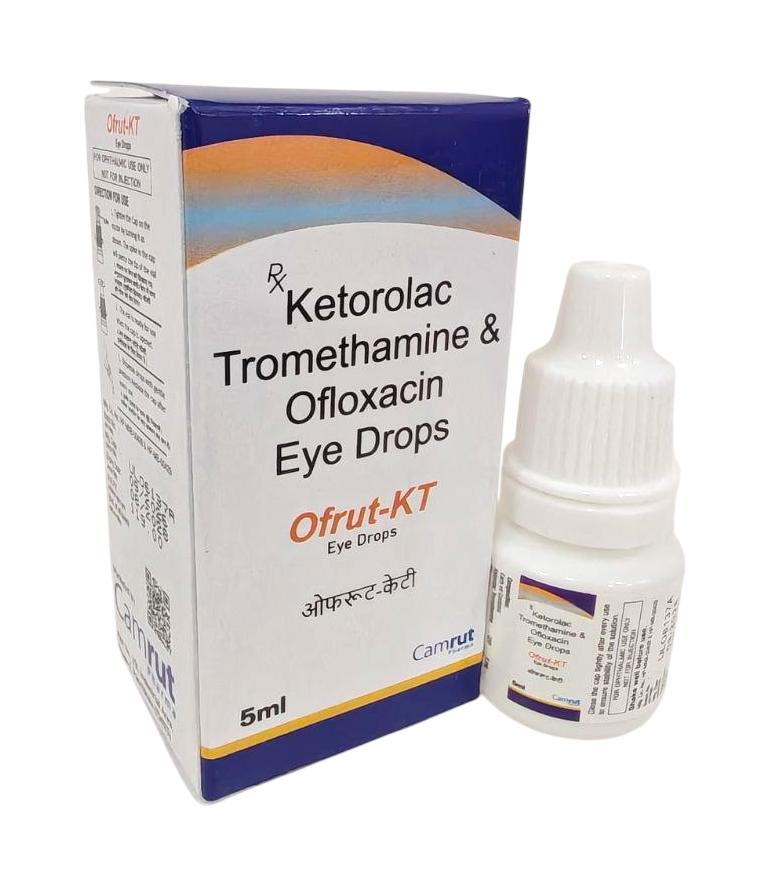
| Composition | Ofloxacin IP 0.3% w/v + Ketorolac Tromethamine IP 0.5% w/v (sterile ophthalmic solution) |
|---|---|
| Dosage Form | Eye Drops (ophthalmic solution) |
| Pack Type | 5 ml dropper bottle |
| Pack Size | 5 ml |
| MRP | ₹ 119 |
| Therapy | Ophthalmology – post-operative infection prophylaxis and inflammation — Fluoroquinolone antibiotic + topical NSAID |
| Storage | Store below 25 °C, protected from light. Do not freeze. Discard 30 days after opening. Keep out of reach of children. |
📱 WhatsApp Enquiry📞 Call: +919041677932
About OFRUT-KT Eye Drops
OFRUT-KT is ofloxacin 0.3% w/v with ketorolac tromethamine 0.5% w/v in a 5 ml sterile eye-drop bottle. It is Trumac Healthcare’s antibiotic-plus-NSAID combination for the days after cataract and other anterior-segment surgery, made at WHO-GMP certified partner units for the ophthalmic PCD franchise and wholesale range.
After cataract surgery the eye needs two things at once: a broad-spectrum antibiotic to prevent endophthalmitis and an anti-inflammatory to control the pain, photophobia and cystoid macular oedema that follow surgical trauma. Ofloxacin covers the Gram-positive and Gram-negative organisms that cause post-operative infection, and ketorolac, a non-steroidal anti-inflammatory, blocks prostaglandin synthesis in the eye without the pressure rise that steroids can cause. One bottle instead of two makes the post-operative regimen simpler for elderly patients.
For ophthalmic PCD partners, antibiotic-NSAID combination drops are a fixed item on every cataract surgeon’s discharge prescription and in eye-camp supply lists, which makes them a steady, high-volume product. OFRUT-KT joins Trumac’s plain ofloxacin (OFRUT), ofloxacin-betamethasone (OFRUT-D), moxifloxacin, tobramycin, loteprednol and lubricant eye drops.
Trumac offers OFRUT-KT on a monopoly PCD pharma franchise for your district, as wholesale stock for ophthalmic distributors and eye hospitals, and with visual aids and product cards. Ask for the ophthalmic product list and net rates on WhatsApp.
Indications
- Prevention of infection and control of inflammation and pain after cataract surgery, intra-ocular lens implantation and other anterior-segment surgery
- Bacterial conjunctivitis and keratitis with a significant inflammatory component, caused by ofloxacin-susceptible organisms
- Post-operative inflammation after refractive (corneal) surgery and pterygium surgery, where antibiotic cover is also needed
- Inflammation after corneal foreign-body removal or minor ocular trauma with risk of infection, as advised by the ophthalmologist
Mechanism of Action
Ofloxacin is a second-generation fluoroquinolone that inhibits bacterial DNA gyrase (topoisomerase II) and topoisomerase IV, the enzymes that supercoil and separate bacterial DNA during replication; the bacterium cannot replicate or repair its chromosome and dies. It is bactericidal against the common ocular pathogens – Staphylococcus aureus and S. epidermidis, Streptococcus pneumoniae, Haemophilus influenzae, Pseudomonas aeruginosa, Enterobacteriaceae and Chlamydia – and penetrates the cornea and aqueous humour well after topical application, reaching concentrations above the MIC of most of these organisms. Ketorolac tromethamine is a non-steroidal anti-inflammatory drug that inhibits cyclo-oxygenase-1 and -2 in ocular tissue, blocking the conversion of arachidonic acid into prostaglandins. Surgical trauma releases prostaglandins that disrupt the blood-aqueous barrier, cause miosis during surgery, and produce post-operative pain, photophobia, conjunctival hyperaemia and cystoid macular oedema; ketorolac reduces all of these and, unlike corticosteroids, does not raise intraocular pressure, delay epithelial healing in the short term or promote infection. Each drug acts independently; the combination gives antibacterial prophylaxis and anti-inflammatory control from a single bottle with no pharmacological interaction between them.
Dosage & Administration
As directed by the ophthalmologist. Usual dose: one or two drops in the affected eye four times a day. After cataract surgery, treatment is usually started 24 hours after the operation (some surgeons begin on the day of surgery) and continued for two to four weeks, the antibiotic component commonly being stopped after one to two weeks and inflammation control continued with ketorolac or a steroid as the surgeon decides. For bacterial conjunctivitis with inflammation: one to two drops every 2–4 hours for the first two days, then four times a day for a further five days. Wash hands, tilt the head back, instil without touching the dropper tip to the eye, close the eye for a minute and press the inner corner. Keep a gap of at least 5 minutes from other eye drops, and remove contact lenses before use (lenses are not worn in the post-operative period). Use beyond the prescribed period, especially of the NSAID, should be avoided; re-examine if symptoms persist.
Side Effects
Common: transient burning or stinging on instillation, blurred vision for a few moments, foreign-body sensation, itching, conjunctival hyperaemia, dry eye and photophobia. Ofloxacin: superficial punctate keratitis, eyelid oedema, crystalline deposits (rare), hypersensitivity reactions including rash, and rarely serious allergic reactions; prolonged use may lead to overgrowth of non-susceptible organisms including fungi. Ketorolac: corneal epithelial defects, thinning, erosion, ulceration or perforation (corneal melt) with prolonged use or in patients with pre-existing corneal disease, diabetes, rheumatoid arthritis, dry eye or repeated surgery; delayed wound healing; increased bleeding of ocular tissue including hyphaema in patients with bleeding tendency or on anticoagulants; and bronchospasm or exacerbation of asthma in aspirin-sensitive patients. Rare: headache, allergic lid dermatitis, iritis, raised intraocular pressure (usually from the underlying condition).
Contraindications & Precautions
Contraindicated in known hypersensitivity to ofloxacin or other quinolones, to ketorolac, aspirin or other NSAIDs (including patients in whom aspirin or NSAIDs precipitate asthma, urticaria or rhinitis), or to any component of the drops. Precautions: ketorolac should be used with caution and for the shortest necessary period in patients with corneal epithelial disease, diabetes, dry-eye syndrome, rheumatoid arthritis, previous ocular surgery within a short period, or with other topical NSAIDs or corticosteroids, because of the risk of corneal melt; stop and refer if epithelial breakdown occurs. Use with care in patients with bleeding tendencies or on anticoagulants, since topical NSAIDs may increase intra-ocular bleeding. Ofloxacin is not active against viral or fungal infections and should not be used for viral conjunctivitis or herpetic keratitis; prolonged use favours resistant organisms and fungal superinfection, so treatment should be limited to the indicated period and the eye re-examined if there is no improvement. The drops are for topical ophthalmic use only, never for injection or for the ear. Do not wear contact lenses during treatment. Pregnancy and breast-feeding: fluoroquinolones and NSAIDs are generally avoided, particularly NSAIDs in the third trimester; use only when the ophthalmologist judges the benefit to outweigh the risk, bearing in mind that systemic absorption from eye drops is very small. Safety in children has not been fully established; use on specialist advice. Do not touch the dropper tip to any surface and discard the bottle 30 days after opening.
Storage
Store below 25 °C, protected from light. Do not freeze. Discard 30 days after opening. Keep out of reach of children.
OFRUT-KT Eye Drops is available for monopoly-based PCD pharma franchise across India and for third-party manufacturing under your brand. WHO-GMP certified, with full visual-aid and promotional support. Become a Trumac franchise partner →
Frequently Asked Questions
Who manufactures ofloxacin + ketorolac eye drops in India for PCD franchise?
OFRUT-KT is made for Trumac Healthcare at WHO-GMP certified partner units and offered on a PCD pharma franchise with monopoly rights for your district. No franchise fee or deposit; first order from ₹25,000.
What is the pack and MRP of OFRUT-KT eye drops?
5 ml dropper bottle, MRP ₹119. Net rates for franchise partners, eye hospitals and wholesalers are shared on WhatsApp.
Is ofloxacin-ketorolac eye drop available for PCD franchise on monopoly basis?
Yes. Trumac appoints one partner per district or defined territory for its ophthalmic division, which includes OFRUT-KT, plain ofloxacin (OFRUT), ofloxacin-betamethasone (OFRUT-D), moxifloxacin, tobramycin, loteprednol and lubricant drops.
Can OFRUT-KT be supplied on wholesale or distributor basis?
Yes. Ophthalmic distributors, eye hospitals and stockists can buy at net rates without a franchise agreement; dispatch within 48 hours of payment from Panchkula.
How do I start an ophthalmic PCD franchise with Trumac?
Send your district, drug licence number and GST on WhatsApp +91 90416 77932. We confirm availability, share the ophthalmic product list and net rates, and dispatch the first order with visual aids.
What is OFRUT-KT used for?
To prevent infection and control pain and inflammation after cataract and other eye surgery, and for bacterial eye infections that have a strong inflammatory component.
How is OFRUT-KT used after cataract surgery?
Usually one or two drops four times a day, starting the day after surgery and continued for two to four weeks as the surgeon directs.
Why combine an antibiotic with ketorolac instead of a steroid?
Ketorolac controls post-operative inflammation and reduces cystoid macular oedema without raising eye pressure or delaying healing the way steroids can; many surgeons use it alone or alongside a steroid.
Can OFRUT-KT be used for a viral red eye?
No. Ofloxacin works only against bacteria, and NSAID drops should not be used in viral or herpetic eye infections without an ophthalmologist's assessment.
What is the risk of using ketorolac eye drops for too long?
Prolonged use, especially in patients with dry eye, diabetes or corneal disease, can thin or ulcerate the cornea; the drops should be used only for the prescribed period and stopped if the eye becomes painful or the vision drops.
Can contact lenses be worn while using OFRUT-KT?
No. Lenses are not worn after eye surgery, and during treatment of an infection they should be left out until the ophthalmologist allows.
Which other ophthalmic products does Trumac offer for franchise?
OFRUT (ofloxacin 0.3%), OFRUT-D (ofloxacin-betamethasone), moxifloxacin and moxifloxacin-bromfenac (MOXIRUT-BF), tobramycin, levofloxacin, loteprednol (LOTEWISE), bepotastine (BEPOWISE), aciclovir eye ointment (ACIRON) and lubricants, all available to franchise partners alongside OFRUT-KT.
Also in this range: OFRUT Eye Drops – ofloxacin 0.3% alone, without ketorolac. Available to the same PCD franchise partners and wholesalers; ask for the combined net-rate list on WhatsApp +91 90416 77932.
Part of the Trumac Healthcare Eye drops list (52 products) – every ophthalmic product with pack and MRP, all available on monopoly PCD franchise and wholesale supply.