
ACIRON Eye Ointment
Aciclovir 3% Ophthalmic Ointment – Ophthalmic PCD Pharma Franchise, Wholesale Supply & Third Party Manufacturing
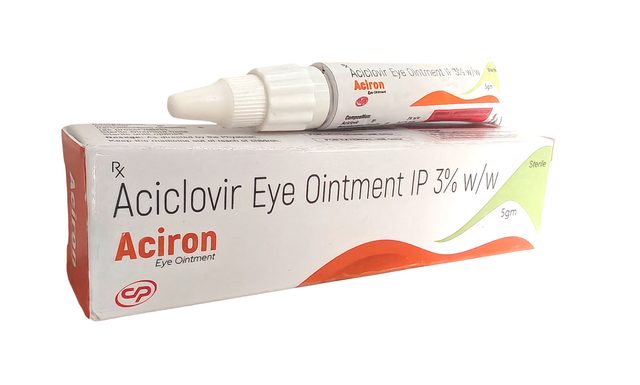
| Composition | Aciclovir IP 3% w/w (sterile ophthalmic ointment base) |
|---|---|
| Dosage Form | Eye Ointment |
| Pack Type | 5 g tube with carton |
| Pack Size | 5 g |
| MRP | ₹ 62.73 |
| Therapy | Ophthalmology – herpes simplex keratitis — Antiviral (nucleoside analogue DNA-polymerase inhibitor) |
| Storage | Store below 25 °C, protected from light. Do not freeze. Discard one month after opening. Keep out of reach of children. |
📱 WhatsApp Enquiry📞 Call: +919041677932
About ACIRON Eye Ointment
ACIRON Eye Ointment is aciclovir 3% w/w in a sterile ophthalmic ointment base, in a 5 g tube with carton. It is Trumac Healthcare’s treatment for herpes simplex keratitis, made at WHO-GMP certified partner units for the ophthalmic PCD franchise and wholesale range, and the ophthalmic member of the ACIRON family of aciclovir tablets, injections and cream.
Herpes simplex keratitis is the commonest infectious cause of corneal blindness in India, and topical aciclovir 3% is the standard first-line treatment for the epithelial (dendritic and geographic) forms. Applied five times a day it penetrates the cornea, stops viral replication in infected epithelial cells and heals most dendritic ulcers within one to two weeks, with far less epithelial toxicity than the older antivirals.
For ophthalmic PCD partners, aciclovir eye ointment is a low-cost, essential-medicine item that every eye hospital, corneal clinic and district chemist must stock, and it is often prescribed alongside oral aciclovir or valaciclovir, cycloplegics and lubricants. ACIRON Eye Ointment completes Trumac’s ophthalmic anti-infective range with ofloxacin, moxifloxacin, tobramycin, levofloxacin and azithromycin products.
Trumac offers ACIRON Eye Ointment on a monopoly PCD pharma franchise for your district, as wholesale stock for ophthalmic distributors and eye hospitals, and with visual aids and product cards. Ask for the ophthalmic product list and net rates on WhatsApp.
Indications
- Herpes simplex keratitis – epithelial dendritic and geographic ulcers of the cornea
- Herpes simplex keratoconjunctivitis and blepharoconjunctivitis
- Adjunct, with topical corticosteroids under specialist supervision, in stromal (disciform) herpetic keratitis and herpetic uveitis to prevent epithelial reactivation
- Prophylaxis against recurrence of epithelial herpetic keratitis in patients receiving topical steroids for other ocular conditions, as advised by the ophthalmologist
Mechanism of Action
Aciclovir is a synthetic acyclic analogue of the nucleoside guanosine. It is selective for cells infected with herpes viruses because the first step of its activation – phosphorylation to aciclovir monophosphate – is carried out efficiently only by the viral thymidine kinase encoded by herpes simplex virus types 1 and 2 (and varicella-zoster virus); uninfected cells phosphorylate it very poorly. Host-cell kinases then convert the monophosphate to aciclovir triphosphate, which competes with deoxyguanosine triphosphate for the viral DNA polymerase, is incorporated into the growing viral DNA chain and, lacking the 3'-hydroxyl group, terminates chain elongation; it also inactivates the polymerase. Viral DNA synthesis stops and the infected cell produces no further virus, while the surrounding healthy corneal epithelium is spared, which is why aciclovir heals dendritic ulcers with much less toxicity than idoxuridine or vidarabine. Applied as a 3% ointment it reaches therapeutic levels in the corneal epithelium, stroma and aqueous humour, with negligible systemic absorption. Aciclovir acts on replicating virus only; it does not eliminate latent virus in the trigeminal ganglion, so recurrences remain possible.
Dosage & Administration
As directed by the ophthalmologist. Apply a 1 cm ribbon of ointment into the lower conjunctival sac of the affected eye five times a day at about four-hourly intervals while awake (for example 7 am, 11 am, 3 pm, 7 pm and 11 pm). Continue for at least three days after the ulcer has healed completely, as confirmed by fluorescein staining; a typical course is 10–14 days, and treatment is generally not continued beyond 14–21 days without review. Wash hands, pull down the lower lid, squeeze the ribbon along the inside of the lid without touching the tube tip to the eye or lashes, close the eye and blink gently; vision will blur for a few minutes. If other eye medicines are prescribed, instil drops first and apply the ointment last, at least 5 minutes later. Do not wear contact lenses during treatment. Oral aciclovir or valaciclovir is added by the ophthalmologist in stromal disease, in immunocompromised patients and for long-term suppression of frequent recurrences.
Side Effects
Common: transient mild stinging or burning immediately after application, blurred vision for a few minutes, and superficial punctate keratopathy (fine epithelial dots, which heal on stopping and seldom require withdrawal of treatment). Uncommon: conjunctivitis, blepharitis and eyelid oedema. Rare: hypersensitivity reactions including angioedema, urticaria and contact dermatitis of the lids. The ointment base can cause temporary discomfort; no systemic adverse effects are expected from ocular use.
Contraindications & Precautions
Contraindicated in known hypersensitivity to aciclovir, valaciclovir or any component of the ointment base. Precautions: the diagnosis of herpetic keratitis and the response to treatment should be confirmed by an ophthalmologist with fluorescein staining; failure to heal within two weeks needs re-examination for resistant virus, neurotrophic keratopathy or drug toxicity. Topical corticosteroids must never be used in epithelial herpetic keratitis without antiviral cover, because they cause the dendrite to enlarge into a geographic ulcer; when steroids are used for stromal disease, antiviral prophylaxis such as ACIRON is continued. Soft contact lenses should not be worn during treatment. The ointment is for ophthalmic use only – not the 5% skin cream, which is not sterile and must not be put in the eye. Pregnancy and breast-feeding: systemic absorption from the eye is negligible and aciclovir has a long safety record, but use on the doctor's advice. Children: may be used at the same dose under specialist supervision. Do not touch the tube tip to any surface and discard one month after opening.
Storage
Store below 25 °C, protected from light. Do not freeze. Discard one month after opening. Keep out of reach of children.
ACIRON Eye Ointment is available for monopoly-based PCD pharma franchise across India and for third-party manufacturing under your brand. WHO-GMP certified, with full visual-aid and promotional support. Become a Trumac franchise partner →
Frequently Asked Questions
Who manufactures aciclovir 3% eye ointment in India for PCD franchise?
ACIRON Eye Ointment is made for Trumac Healthcare at WHO-GMP certified partner units and offered on a PCD pharma franchise with monopoly rights for your district. No franchise fee or deposit; first order from ₹25,000.
What is the pack and MRP of ACIRON Eye Ointment?
5 g sterile tube with carton, MRP ₹62.73. Net rates for franchise partners, eye hospitals and wholesalers are shared on WhatsApp.
Is aciclovir eye ointment available for PCD franchise on monopoly basis?
Yes. Trumac appoints one partner per district or defined territory for its ophthalmic division, which includes ACIRON Eye Ointment together with ofloxacin, moxifloxacin, tobramycin, levofloxacin, azithromycin, loteprednol, anti-allergic and lubricant products.
Can ACIRON Eye Ointment be supplied on wholesale or distributor basis?
Yes. Ophthalmic distributors, eye hospitals and stockists can buy at net rates without a franchise agreement; dispatch within 48 hours of payment from Panchkula.
How do I start an ophthalmic PCD franchise with Trumac?
Send your district, drug licence number and GST on WhatsApp +91 90416 77932. We confirm availability, share the ophthalmic product list and net rates, and dispatch the first order with visual aids.
What is ACIRON Eye Ointment used for?
Herpes simplex infection of the cornea and conjunctiva – dendritic and geographic ulcers – and as antiviral cover when steroids are used for deeper herpetic eye disease.
How is ACIRON Eye Ointment applied?
A 1 cm ribbon inside the lower eyelid five times a day, about every four hours while awake, continued for at least three days after the ulcer has healed.
How long does a dendritic ulcer take to heal with aciclovir?
Most epithelial ulcers heal within one to two weeks; the ophthalmologist confirms healing with a fluorescein stain before treatment is stopped.
Can steroid eye drops be used with ACIRON?
Only on an ophthalmologist's prescription for stromal or deeper disease, and always with antiviral cover; steroids alone make epithelial herpes much worse.
Can the aciclovir skin cream be used in the eye instead?
No. The 5% skin cream is not sterile and its base is not suitable for the eye; only the 3% sterile ophthalmic ointment should be used.
Does aciclovir cure herpes of the eye permanently?
It heals the current attack by stopping the virus from multiplying, but the virus stays dormant in the nerve and can recur; frequent recurrences are prevented with long-term oral aciclovir or valaciclovir on the doctor's advice.
Which other ACIRON products does Trumac offer?
Aciclovir 200, 400 and 800 mg tablets, 250 and 500 mg injections and 5% skin cream, plus valaciclovir 500 mg and 1000 mg tablets (VALAXOR), all available to franchise partners alongside ACIRON Eye Ointment.
Also in this range: ACIRON Cream – aciclovir 5% skin cream for cold sores and genital herpes. Available to the same PCD franchise partners and wholesalers; ask for the combined net-rate list on WhatsApp +91 90416 77932.
Part of the Trumac Healthcare Eye drops list (52 products) – every ophthalmic product with pack and MRP, all available on monopoly PCD franchise and wholesale supply.