
DICLORUT-50 Tablet
Diclofenac Sodium 50 mg Tablets – GP & Ortho PCD Pharma Franchise, Wholesale Supply & Third Party Manufacturing
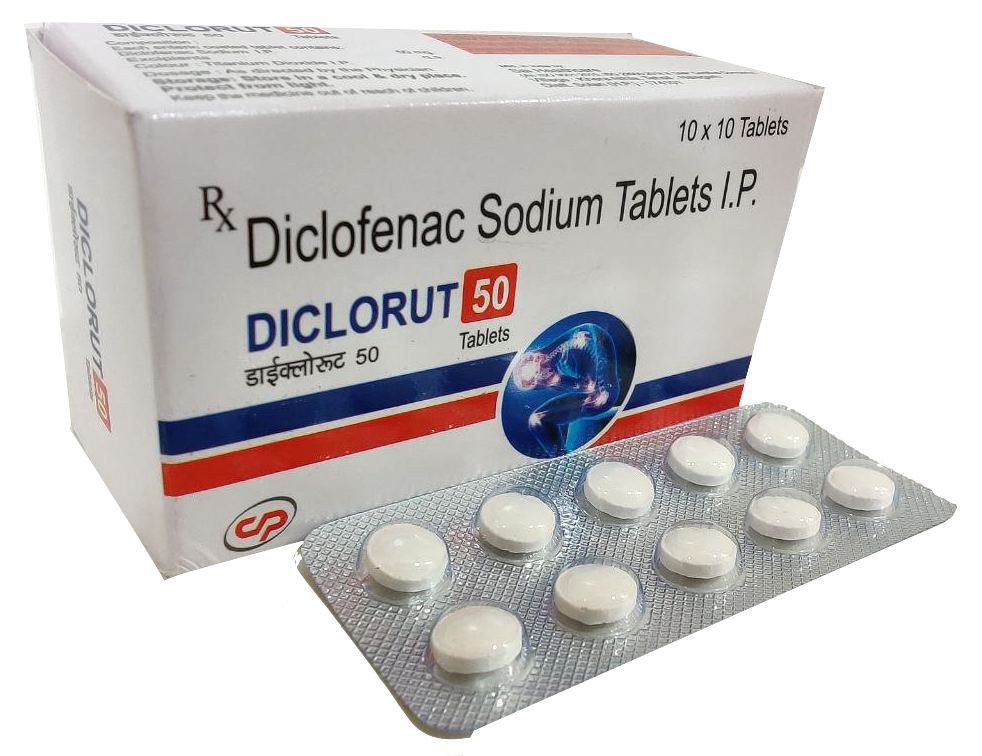
| Composition | Diclofenac Sodium IP 50 mg (enteric-coated) |
|---|---|
| Dosage Form | Tablet |
| Pack Type | Blister |
| Pack Size | 10 x 10 Tablets |
| MRP | ₹ 229 |
| Therapy | General practice / Orthopaedics / Dental – pain and inflammation — Non-steroidal anti-inflammatory drug (NSAID) |
| Storage | Store below 30 °C in a dry place, protected from light and moisture. Keep out of reach of children. |
📱 WhatsApp Enquiry📞 Call: +919041677932
About DICLORUT-50 Tablet
DICLORUT-50 is diclofenac sodium 50 mg in an enteric-coated tablet, packed 10 x 10 in blisters. It is the plain NSAID in Trumac Healthcare’s DICLORUT range (diclofenac 100 mg SR and the combinations with paracetamol, serratiopeptidase, chlorzoxazone, dicyclomine and trypsin-chymotrypsin), made at WHO-GMP certified partner units for the general-practice, orthopaedic, dental and gynaecology PCD franchise and wholesale range.
Diclofenac is the most used NSAID in Indian practice and the WHO essential-medicine standard for inflammatory pain. The 50 mg strength, taken two or three times a day, is the reference dose for arthritis flares, back pain, sports injuries, dental pain, dysmenorrhoea and post-operative pain, and the enteric coating lets the tablet pass the stomach before dissolving.
For PCD partners, plain diclofenac 50 is a fast-moving essential that every chemist, nursing home and orthopaedic clinic stocks, and the starting point from which the prescriber moves to DICLORUT (with paracetamol), DICLORUT-SP or the 100 mg SR tablet. Trumac supports it with diclofenac gel, serratiopeptidase, muscle relaxants and the full ortho range.
Trumac offers DICLORUT-50 on a monopoly PCD pharma franchise for your district, as wholesale stock for distributors, and with visual aids and product cards. Ask for the general-range product list and net rates on WhatsApp.
Indications
- Rheumatoid arthritis, osteoarthritis and ankylosing spondylitis – relief of pain and inflammation
- Acute musculoskeletal disorders – sprains, strains, low-back pain, tendinitis, bursitis, frozen shoulder and sports injuries
- Acute gout
- Post-operative and post-traumatic pain and swelling, including after dental and orthopaedic surgery
- Primary dysmenorrhoea, renal and biliary colic (as part of treatment), and migraine attacks on medical advice
Mechanism of Action
Diclofenac is a phenylacetic-acid NSAID that inhibits both isoforms of cyclo-oxygenase (COX-1 and COX-2), the enzymes that convert arachidonic acid into prostaglandins and thromboxane. Prostaglandin E2 and prostacyclin at a site of injury dilate vessels, increase capillary permeability (oedema), sensitise pain nerve endings to bradykinin and histamine, and – in the hypothalamus – raise the temperature set-point; blocking their synthesis reduces inflammation, pain and fever. Diclofenac is relatively COX-2-preferential at therapeutic doses, has additional actions that explain its strong analgesia – it lowers intracellular arachidonic acid by increasing its re-uptake, inhibits the lipoxygenase pathway and leukotriene formation, blocks the thromboxane-prostanoid receptor, and has a central analgesic effect through the opioid and nitric-oxide-cGMP pathways – and it concentrates in synovial fluid, where it persists longer than in plasma, which suits joint disease. The enteric coating delays release until the small intestine; absorption is complete, peak plasma levels occur in 2–3 hours, 99% is protein-bound, and the drug is metabolised in the liver by CYP2C9 and glucuronidation and excreted in urine and bile with a plasma half-life of 1–2 hours but a longer effect at the site of inflammation.
Dosage & Administration
Adults, as directed by the physician: usual dose 75–150 mg a day in two or three divided doses – one tablet two or three times daily – swallowed whole with water with or after food; do not crush or chew the enteric-coated tablet. Use the lowest effective dose for the shortest period; review treatment within 1–2 weeks for acute pain and regularly in chronic arthritis, where the doctor may switch to the 100 mg SR tablet once daily. Maximum 150 mg a day. Elderly, patients with cardiovascular risk factors, renal or hepatic impairment, or a history of ulcer: use the lowest dose, monitor, and consider a proton-pump inhibitor during NSAID use. For dysmenorrhoea start at the first sign of pain. Not recommended for children under 14 years (lower-strength forms are used in children under specialist advice). Not for use in the third trimester of pregnancy.
Side Effects
Common (1–10%): headache, dizziness, vertigo, nausea, vomiting, diarrhoea, dyspepsia, abdominal pain, flatulence, loss of appetite, raised transaminases, and rash. Rare: gastritis, gastrointestinal bleeding, haematemesis, melaena, bloody diarrhoea, gastric or duodenal ulcer with or without bleeding or perforation (risk rises with dose, duration, age, previous ulcer, alcohol, corticosteroids, anticoagulants and SSRIs), hepatitis and jaundice, asthma and bronchospasm (especially in aspirin-sensitive patients), urticaria, hypersensitivity and anaphylaxis, oedema, drowsiness. Very rare: colitis and exacerbation of ulcerative colitis or Crohn's disease, pancreatitis, constipation, stomatitis, glossitis, oesophageal lesions, fulminant hepatitis and liver failure, acute kidney injury, interstitial nephritis, nephrotic syndrome, renal papillary necrosis, haematuria and proteinuria, blood dyscrasias (thrombocytopenia, leucopenia, agranulocytosis, haemolytic and aplastic anaemia), serious skin reactions (Stevens–Johnson syndrome, toxic epidermal necrolysis, exfoliative dermatitis, erythema multiforme, DRESS), photosensitivity, alopecia, purpura, angioedema, palpitations, chest pain, hypertension, heart failure, and – with high doses and long courses – a small increase in the risk of myocardial infarction and stroke; paraesthesia, memory and sleep disturbance, convulsions, aseptic meningitis (lupus patients), visual disturbance, tinnitus and hearing impairment, taste disturbance, and impotence. Report at once: black or bloody stools, vomiting blood, severe stomach pain, swelling of the face or breathing difficulty, yellow skin or eyes, very little urine, chest pain or weakness on one side, or a spreading rash with blisters.
Contraindications & Precautions
Contraindicated in known hypersensitivity to diclofenac or any excipient; in patients in whom aspirin or other NSAIDs precipitate asthma, urticaria, rhinitis or angioedema; active gastric or duodenal ulcer, bleeding or perforation, or a history of two or more episodes, or a history of NSAID-related bleeding or perforation; severe hepatic, renal (creatinine clearance below 30 ml/min) or cardiac failure; established congestive heart failure (NYHA II–IV), ischaemic heart disease, peripheral arterial disease or cerebrovascular disease; treatment of peri-operative pain in coronary artery bypass surgery; the third trimester of pregnancy; and children under 14. Precautions: use the lowest dose for the shortest time; the elderly and patients with a history of ulcer, inflammatory bowel disease, hypertension, fluid retention, mild to moderate renal or hepatic impairment, hepatic porphyria, bleeding disorders or asthma need care and monitoring; NSAIDs can mask the signs of infection; stop at the first sign of a rash, mucosal lesion or hypersensitivity; dehydration, diuretics, ACE inhibitors and ARBs increase the risk of kidney injury; patients with significant cardiovascular risk factors (hypertension, hyperlipidaemia, diabetes, smoking) should receive diclofenac only after careful consideration and never above 100–150 mg daily; diclofenac may impair female fertility and should be withdrawn in women trying to conceive; avoid in the first and second trimesters unless clearly necessary; breast-feeding – small amounts pass into milk, use only on advice. Interactions: other NSAIDs and aspirin (additive toxicity – avoid), anticoagulants and antiplatelets including clopidogrel (bleeding), corticosteroids and SSRIs (GI bleeding), ACE inhibitors, ARBs and diuretics (reduced effect, renal failure, hyperkalaemia with potassium-sparing diuretics), lithium, digoxin and methotrexate (raised levels – avoid methotrexate within 24 hours), ciclosporin and tacrolimus (nephrotoxicity), quinolone antibiotics (convulsions), sulfonylureas (blood-glucose changes), phenytoin (raised levels), zidovudine (haematotoxicity), mifepristone (avoid NSAIDs for 8–12 days), colestipol and cholestyramine (reduced absorption), CYP2C9 inhibitors such as voriconazole and fluconazole (raised diclofenac levels – reduce dose), and rifampicin (reduced levels).
Storage
Store below 30 °C in a dry place, protected from light and moisture. Keep out of reach of children.
DICLORUT-50 Tablet is available for monopoly-based PCD pharma franchise across India and for third-party manufacturing under your brand. WHO-GMP certified, with full visual-aid and promotional support. Become a Trumac franchise partner →
Frequently Asked Questions
Who manufactures diclofenac 50 mg tablets in India for PCD franchise?
DICLORUT-50 is made for Trumac Healthcare at WHO-GMP certified partner units and offered on a PCD pharma franchise with monopoly rights for your district. No franchise fee or deposit; first order from ₹25,000.
What is the pack and MRP of DICLORUT-50?
10 x 10 enteric-coated tablets in blisters, MRP ₹229. The range also has DICLORUT-100 SR, DICLORUT (with paracetamol), DICLORUT-SP, DICLORUT-MR, DICLORUT-SPAS and DICLORUT-XL. Net rates for franchise partners and wholesalers are shared on WhatsApp.
Is diclofenac available for PCD franchise on monopoly basis?
Yes. Trumac appoints one partner per district or defined territory for its general-practice and orthopaedic divisions, which include the whole DICLORUT family, aceclofenac, etoricoxib, serratiopeptidase, muscle relaxants, gels and the ortho range.
Can DICLORUT-50 be supplied on wholesale or distributor basis?
Yes. Distributors and stockists can buy at net rates without a franchise agreement; dispatch within 48 hours of payment from Panchkula.
How do I start a GP or ortho PCD franchise with Trumac?
Send your district, drug licence number and GST on WhatsApp +91 90416 77932. We confirm availability, share the product list and net rates, and dispatch the first order with visual aids.
What is DICLORUT-50 used for?
Pain and inflammation of arthritis, back pain, sprains and sports injuries, gout attacks, dental and post-operative pain, and period pain.
How is diclofenac 50 mg taken?
One tablet two or three times a day with or after food, swallowed whole, for the shortest time needed; the maximum is three tablets (150 mg) a day.
Why is the tablet enteric-coated?
The coating stops the tablet dissolving in the stomach and releases diclofenac in the small intestine, which reduces direct irritation of the stomach lining, although the systemic ulcer risk of any NSAID remains.
Who should not take diclofenac?
People with a stomach ulcer or bleeding, asthma triggered by painkillers, heart disease, heart failure or stroke, severe kidney or liver disease, women in the last three months of pregnancy, and children under 14.
Can diclofenac be taken with blood-pressure or blood-thinning medicines?
Only on the doctor's advice: NSAIDs reduce the effect of ACE inhibitors, ARBs and diuretics and can harm the kidneys, and they add to the bleeding risk of warfarin, clopidogrel and aspirin.
What are the warning signs to report?
Black or bloody stools, vomiting blood, severe stomach pain, swelling of the face or wheezing, yellow skin, very little urine, chest pain, or a blistering rash.
Which other pain products does Trumac offer for franchise?
DICLORUT-100 SR, DICLORUT (diclofenac + paracetamol), DICLORUT-SP, DICLORUT-MR, DICLORUT-SPAS, DICLORUT-XL, aceclofenac combinations, etoricoxib, tramadol-paracetamol, diclofenac gel and the ortho range, all available to franchise partners alongside DICLORUT-50.
Same composition, second brand: DICOFER-50 Tablet – diclofenac 50 mg. Both brands are supplied to PCD franchise partners and wholesalers; ask on WhatsApp +91 90416 77932 which one is free for your district.
Part of the Trumac Healthcare Painkiller tablets list (104 products) – every oral and injectable painkiller, NSAID and muscle-relaxant combination with pack and MRP, all available on monopoly PCD franchise and wholesale supply.