
QUINLY-400 Tablet
Hydroxychloroquine Sulphate 400 mg Tablet – PCD Pharma Franchise, Manufacturers & Wholesale Suppliers
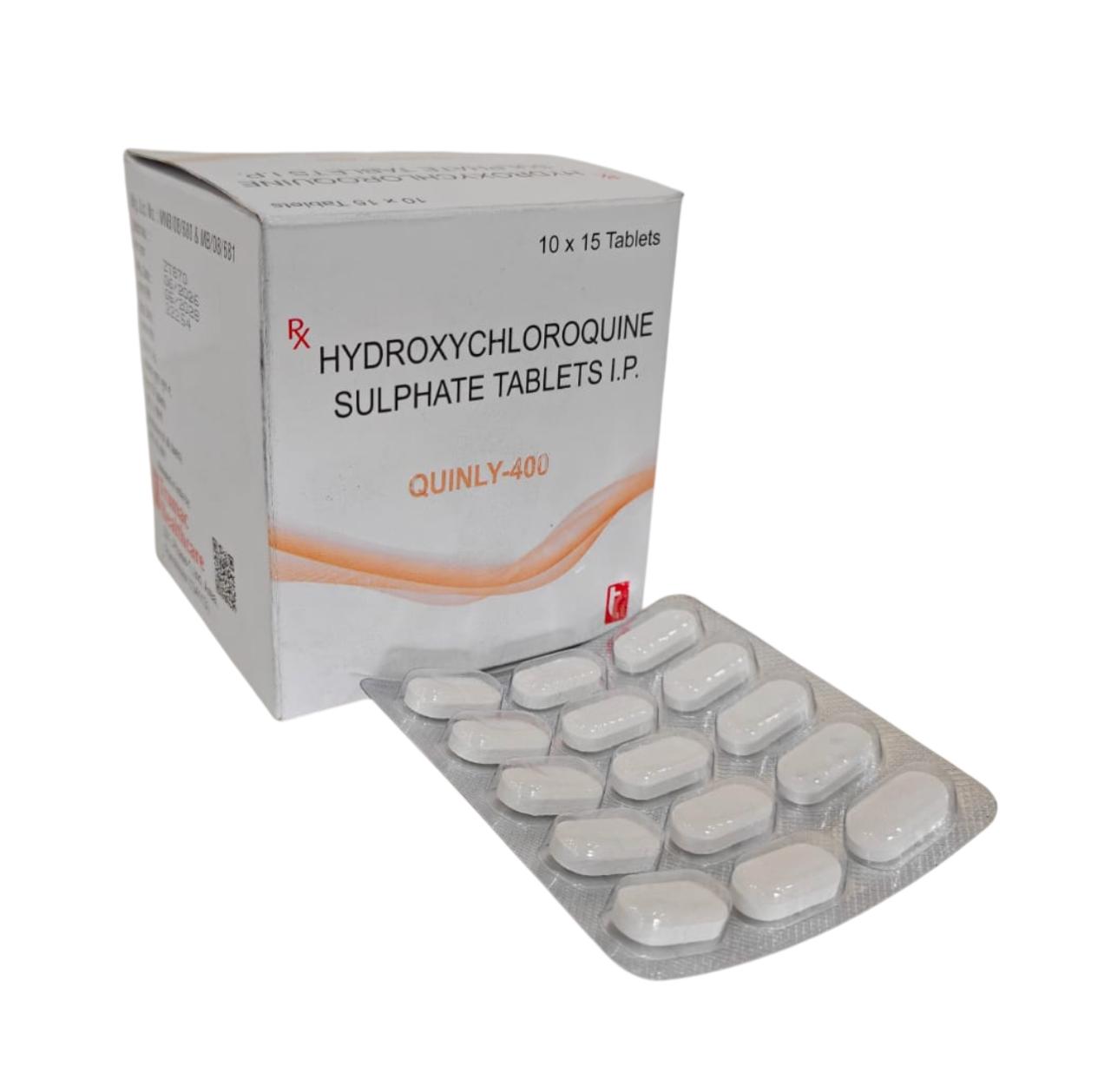
| Composition | Hydroxychloroquine Sulphate IP 400 mg |
|---|---|
| Dosage Form | Tablet |
| Pack Type | Blister |
| Pack Size | 10 x 15 Tablets |
| MRP | ₹ 2225 |
| Therapy | Rheumatology — Antimalarial / disease-modifying antirheumatic drug (DMARD) |
| Storage | Store below 30 °C in a dry place, protected from light and moisture. Keep out of reach of children. |
📱 WhatsApp Enquiry📞 Call: +919041677932
For chemists, distributors, medical representatives and doctors: QUINLY-400 (Hydroxychloroquine 400mg Tablet) is available from Trumac Healthcare on a PCD franchise with monopoly rights for your district, and as wholesale stock for licensed distributors. No franchise fee; first order from ₹25,000 – work out your margin with the PTR / PTS calculator (PTR and PTS full form; most medicines carry 5% GST).
About QUINLY-400 Tablet
QUINLY-400 is Trumac Healthcare’s hydroxychloroquine sulphate 400 mg tablet in a 10 x 15 blister pack (MRP ₹2,225), made for Trumac at WHO-GMP certified partner units. QUINLY-300 is available in the same range for lower doses.
Hydroxychloroquine is a disease-modifying antirheumatic drug for rheumatoid arthritis and lupus and an antimalarial. The 400 mg once-daily strength is used where the patient’s weight allows it within the recommended 5 mg/kg/day limit.
Hydroxychloroquine is a long-term, repeat prescription in rheumatology, orthopaedics and general practice, which makes QUINLY-400 a steady product for ortho and G.P PCD franchise partners.
Looking up another Trumac medicine? See what every Trumac Healthcare brand is used for – A–Z in English and Hindi: Trumac Healthcare tablet uses. Take medicines only as your doctor prescribes.
Indications
- Rheumatoid arthritis, alone or in combination with other DMARDs
- Systemic lupus erythematosus and discoid or chronic cutaneous lupus
- Treatment and prevention of malaria caused by susceptible Plasmodium species, according to current guidelines
Mechanism of Action
Hydroxychloroquine is a 4-aminoquinoline that accumulates in lysosomes and raises their pH. In immune cells this interferes with antigen processing and presentation and inhibits Toll-like receptor (TLR7/9) signalling, lowering production of inflammatory cytokines. This immunomodulatory action reduces disease activity in rheumatoid arthritis and lupus without broadly suppressing immunity. In malaria it interferes with the parasite's detoxification of haem inside red blood cells. It has a very long half-life, so full benefit in rheumatic disease takes 2–3 months.
Dosage & Administration
Dose as prescribed, usually once daily with food or milk. Keep the daily dose at or below 5 mg/kg of actual body weight – 400 mg/day suits patients of about 80 kg or more. Response is assessed after 2–3 months. Baseline eye examination and yearly retinal screening after 5 years (earlier in high-risk patients). ECG may be advised in heart disease or with other QT-prolonging drugs. Periodic blood counts and liver tests on long-term use.
Side Effects
Common: nausea, stomach pain, diarrhoea, loss of appetite, headache, skin rash and itching. Less common: dizziness, blurred vision or difficulty focusing (usually reversible), hair thinning, skin pigmentation, mood changes and sleep problems. Rare but serious: retinal damage with long-term use, heart rhythm problems and cardiomyopathy, low blood sugar, severe skin reactions, blood disorders, muscle weakness and worsening of psoriasis.
Contraindications & Precautions
Do not use in known hypersensitivity to hydroxychloroquine or 4-aminoquinolines, or in pre-existing maculopathy (retinal disease) unless the specialist decides otherwise. Key warning – retinal toxicity: long-term use can cause irreversible retinopathy. Keep the daily dose at or below 5 mg/kg of actual body weight; get a baseline eye examination and annual screening after 5 years of use (earlier and yearly in high-risk patients – kidney disease, tamoxifen use, high dose or pre-existing eye disease). Stop and see the doctor for any change in vision. Other precautions: QT prolongation and arrhythmia (avoid with other QT-prolonging drugs; caution in heart disease and low potassium or magnesium), cardiomyopathy on long-term use, hypoglycaemia (warn diabetics), G6PD deficiency, psoriasis and porphyria (may worsen), myasthenia gravis, neuropsychiatric effects including suicidal behaviour, liver or kidney impairment, and blood count changes. Interactions: antacids and kaolin reduce absorption (separate by 4 hours); it can raise digoxin and ciclosporin levels and increase the effect of insulin and oral antidiabetics; mefloquine and other antimalarials increase seizure risk. Keep out of reach of children – overdose is especially dangerous in children. In pregnancy and breastfeeding, use only if the specialist judges the benefit outweighs the risk (it is often continued in lupus under supervision).
Storage
Store below 30 °C in a dry place, protected from light and moisture. Keep out of reach of children.
QUINLY-400 Tablet is available for monopoly-based PCD pharma franchise across India and for third-party manufacturing under your brand. WHO-GMP certified, with full visual-aid and promotional support. Become a Trumac franchise partner →
From Trumac Healthcare, a pharma franchise company in India, available on a monopoly basis – see the gynaecology products franchise product list (PDF). See our full PCD franchise tablets range. Comparing companies? See the compare gynae PCD companies. No franchise fee; minimum first order ₹25,000 – cost and documents.
Other strengths and forms in the QUINLY range: Quinly-200 · QUINLY-300 Tablet.
Frequently Asked Questions
What is QUINLY-400 used for?
It contains hydroxychloroquine 400 mg and is used for rheumatoid arthritis, lupus and malaria as prescribed by a doctor. It is a prescription-only medicine.
Is 400 mg suitable for every patient?
No. The daily dose should not exceed 5 mg/kg of actual body weight, so 400 mg a day suits patients of about 80 kg or more; lighter patients usually need a lower dose such as QUINLY-300.
Why are eye check-ups needed?
Long-term use can cause irreversible retinal damage. A baseline eye test and yearly screening after 5 years (earlier in high-risk patients) are recommended.
Can hydroxychloroquine lower blood sugar?
Yes, it can cause low blood sugar, especially in people on insulin or diabetes tablets. Watch for sweating, shakiness or confusion.
Who manufactures hydroxychloroquine 400mg tablet in India for PCD franchise?
QUINLY-400 is made for Trumac Healthcare at WHO-GMP certified partner units and supplied across India. Trumac has been a PCD pharma franchise company since 2007 with 4000+ franchise partners.
Is hydroxychloroquine 400mg tablet available on a PCD pharma franchise on monopoly basis?
Yes. QUINLY-400 is offered on PCD franchise with monopoly rights for your district, with no franchise fee or deposit. The minimum first order is ₹25,000.
Can distributors and wholesalers buy hydroxychloroquine 400mg tablet in bulk?
Yes. Licensed distributors, wholesalers and chemists can buy QUINLY-400 on wholesale – message us on WhatsApp at +91 90416 77932 for net rates. Orders are usually dispatched the same day the payment reflects.
What is the pack size and MRP of QUINLY-400?
10 x 15 tablets in blister pack, MRP ₹2,225 as per the current product list. QUINLY-300 (hydroxychloroquine 300 mg) is also in the range.
How do I start a hydroxychloroquine 400mg tablet PCD franchise?
Share your drug licence and district on WhatsApp (+91 90416 77932). We check district availability and send the product list and rates; stock is dispatched after the first order is confirmed.