
LOTEWISE Eye Drops
Loteprednol Etabonate 0.5% w/v Ophthalmic Suspension – Ophthalmic PCD Pharma Franchise, Wholesale Supply & Third Party Manufacturing
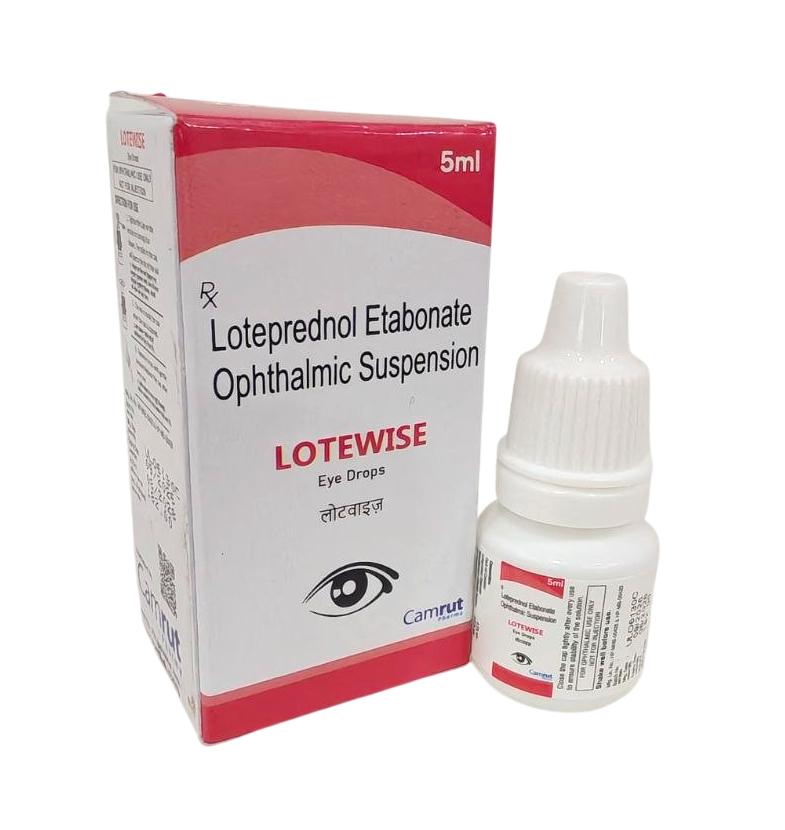
| Composition | Loteprednol Etabonate 0.5% w/v (ophthalmic suspension) |
|---|---|
| Dosage Form | Eye Drops (ophthalmic suspension) |
| Pack Type | 5 ml dropper bottle |
| Pack Size | 5 ml |
| MRP | ₹ 182 |
| Therapy | Ophthalmology – ocular inflammation — Topical ophthalmic corticosteroid (soft steroid) |
| Storage | Store below 25 °C in an upright position, protected from light. Do not freeze. Shake well before use. Discard 30 days after opening. Keep out of reach of children. |
📱 WhatsApp Enquiry📞 Call: +919041677932
About LOTEWISE Eye Drops
LOTEWISE is loteprednol etabonate 0.5% w/v ophthalmic suspension in a 5 ml dropper bottle. It is Trumac Healthcare’s plain loteprednol eye drop for steroid-responsive inflammation of the eye and for post-operative inflammation after cataract and other ocular surgery, made at WHO-GMP certified partner units for the ophthalmic PCD franchise and wholesale range.
Loteprednol is a ‘soft’ corticosteroid: it is an ester that is active in the eye and then broken down by tissue esterases into inactive metabolites. The result is potent anti-inflammatory activity with a much lower rise in intraocular pressure than prednisolone or dexamethasone, which is why ophthalmologists favour it for allergic and post-surgical inflammation and for steroid responders.
For ophthalmic PCD partners, a single-ingredient loteprednol complements the loteprednol + tobramycin (TOBRACAM-LP) and loteprednol + moxifloxacin combinations and the anti-allergic drops BEPOWISE and OLOCAM-OD. Cataract surgeons, cornea specialists and general ophthalmologists prescribe it in high volume, and it is a standard item in every eye-care distribution list.
Trumac offers LOTEWISE on a monopoly PCD pharma franchise for your district, as wholesale stock for ophthalmic distributors, and with visual aids and product cards. Ask for the ophthalmic product list and net rates on WhatsApp.
Indications
- Steroid-responsive inflammatory conditions of the palpebral and bulbar conjunctiva, cornea and anterior segment – allergic conjunctivitis, vernal and atopic keratoconjunctivitis, acne rosacea keratitis, superficial punctate keratitis, herpes zoster keratitis, iritis and cyclitis
- Post-operative inflammation after cataract surgery and other ocular surgery
- Episcleritis and other anterior-segment inflammation where a steroid is indicated and the risk of raised intraocular pressure must be kept low
Mechanism of Action
Loteprednol etabonate is a corticosteroid designed on the 'soft drug' principle. The C-20 chloromethyl ester keeps it active at the glucocorticoid receptor in ocular tissue, where it inhibits phospholipase A2 and the transcription of inflammatory genes, reducing prostaglandin and leukotriene synthesis, capillary dilatation, oedema, fibrin deposition and the migration of leucocytes into the inflamed tissue. Once it has acted, tissue esterases hydrolyse the ester into inactive carboxylic-acid metabolites that are cleared from the eye. Because the molecule is lipophilic it penetrates the cornea well, yet its rapid inactivation means that the trabecular-meshwork effects that raise intraocular pressure with prednisolone acetate or dexamethasone are much less pronounced: in clinical trials a clinically significant pressure rise (10 mmHg or more) occurred in about 2% of patients on loteprednol 0.5% compared with about 7% on prednisolone acetate 1%. Systemic absorption is negligible.
Dosage & Administration
As directed by the ophthalmologist. Shake the bottle vigorously before every use, because loteprednol is a suspension. Steroid-responsive inflammation: one to two drops into the conjunctival sac of the affected eye four times a day; during the first week the dose may be increased, up to one drop every hour if necessary, and then tapered as the inflammation settles. Post-operative inflammation: one to two drops four times a day, starting 24 hours after surgery and continuing for two weeks or as advised. Do not stop abruptly after prolonged use; taper under supervision. If treatment goes beyond 10 days, intraocular pressure should be checked. Remove contact lenses before instilling and wait 10 minutes before re-inserting. Keep a 5-minute gap from other eye drops.
Side Effects
Common (1–5%): transient blurred vision, burning or stinging on instillation, foreign-body sensation, chemosis, dry eye, itching, discharge, photophobia and headache. Steroid-class effects, less frequent with loteprednol than with prednisolone or dexamethasone but still possible with prolonged use: raised intraocular pressure that can progress to glaucoma with optic-nerve damage, posterior subcapsular cataract, delayed wound healing, thinning of the cornea or sclera leading to perforation in diseases that already thin these tissues, secondary bacterial or fungal infection, and masking or worsening of viral infection, especially herpes simplex. Rare: allergic reaction, lid swelling, rash.
Contraindications & Precautions
Contraindicated in most viral diseases of the cornea and conjunctiva – including epithelial herpes simplex (dendritic) keratitis, vaccinia and varicella – and in mycobacterial infection of the eye and fungal diseases of ocular structures; also in known hypersensitivity to loteprednol, other corticosteroids or any component of the formulation. Precautions: prolonged use can raise intraocular pressure, cause cataract and increase the risk of secondary infection, so IOP should be monitored if the drops are used for more than 10 days and the patient should be re-examined before any renewal of the prescription. Use with great caution in patients with a history of herpes simplex keratitis, and in glaucoma or diabetes. Corticosteroids delay healing and may cause perforation in conditions that thin the cornea or sclera; after cataract surgery they may increase the chance of bleb formation. Persistent corneal ulceration after steroid use should raise suspicion of fungal infection. Pregnancy and breast-feeding: use only on the doctor's advice when the benefit justifies the risk. Safety and efficacy in children have not been established. Not for injection and never for use with the dropper tip touching the eye.
Storage
Store below 25 °C in an upright position, protected from light. Do not freeze. Shake well before use. Discard 30 days after opening. Keep out of reach of children.
LOTEWISE Eye Drops is available for monopoly-based PCD pharma franchise across India and for third-party manufacturing under your brand. WHO-GMP certified, with full visual-aid and promotional support. Become a Trumac franchise partner →
Frequently Asked Questions
Who manufactures loteprednol etabonate 0.5% eye drops in India for PCD franchise?
LOTEWISE is made for Trumac Healthcare at WHO-GMP certified partner units and offered on a PCD pharma franchise with monopoly rights for your district. No franchise fee or deposit; first order from ₹25,000.
What is the pack and MRP of LOTEWISE eye drops?
5 ml dropper bottle, MRP ₹182. Net rates for franchise partners and wholesalers are shared on WhatsApp.
Is loteprednol eye drop available for PCD franchise on monopoly basis?
Yes. Trumac appoints one partner per district or defined territory for its ophthalmic division, which includes LOTEWISE, loteprednol + tobramycin (TOBRACAM-LP), anti-allergics, antibiotics and lubricants.
Can LOTEWISE be supplied on wholesale or distributor basis?
Yes. Ophthalmic distributors and stockists can buy at net rates without a franchise agreement; dispatch within 48 hours of payment from Panchkula.
How do I start an ophthalmic PCD franchise with Trumac?
Send your district, drug licence number and GST on WhatsApp +91 90416 77932. We confirm availability, share the ophthalmic product list and net rates, and dispatch the first order with visual aids.
What is LOTEWISE used for?
Steroid-responsive inflammation of the conjunctiva, cornea and front of the eye – allergic conjunctivitis, vernal keratoconjunctivitis, keratitis, iritis – and inflammation after cataract or other eye surgery.
How is LOTEWISE used?
Shake well, then one to two drops in the affected eye four times a day, as prescribed; after surgery it is usually started 24 hours later and continued for two weeks.
Why is loteprednol preferred over prednisolone or dexamethasone drops?
Loteprednol is inactivated by enzymes in the eye after it has worked, so it raises intraocular pressure far less often than the older steroids while still controlling inflammation effectively.
Can LOTEWISE be used for a red eye without a prescription?
No. Steroid drops can make viral and fungal infections much worse and can raise eye pressure; they should be used only after an ophthalmologist has examined the eye.
Why must the bottle be shaken?
LOTEWISE is a suspension – the drug particles settle on standing – so the bottle must be shaken vigorously before every use to deliver the correct dose.
Does LOTEWISE need eye-pressure monitoring?
If treatment lasts more than 10 days, the ophthalmologist should check intraocular pressure, and the patient should be re-examined before the prescription is renewed.
Which other ophthalmic products does Trumac offer for franchise?
Loteprednol + tobramycin (TOBRACAM-LP), moxifloxacin + loteprednol, bepotastine (BEPOWISE), olopatadine (OLOCAM-OD), moxifloxacin, tobramycin, levofloxacin, bimatoprost and lubricant drops, all available to franchise partners alongside LOTEWISE.
Also in this range: TOBRACAM-LP Eye Drops – loteprednol 0.5% + tobramycin 0.3%. Available to the same PCD franchise partners and wholesalers; ask for the combined net-rate list on WhatsApp +91 90416 77932.
Part of the Trumac Healthcare Eye drops list (52 products) – every ophthalmic product with pack and MRP, all available on monopoly PCD franchise and wholesale supply.