
TOBRACAM-LP Eye Drops
Loteprednol + Tobramycin Eye Drops – Ophthalmic PCD Pharma Franchise, Wholesale Supply & Third Party Manufacturing
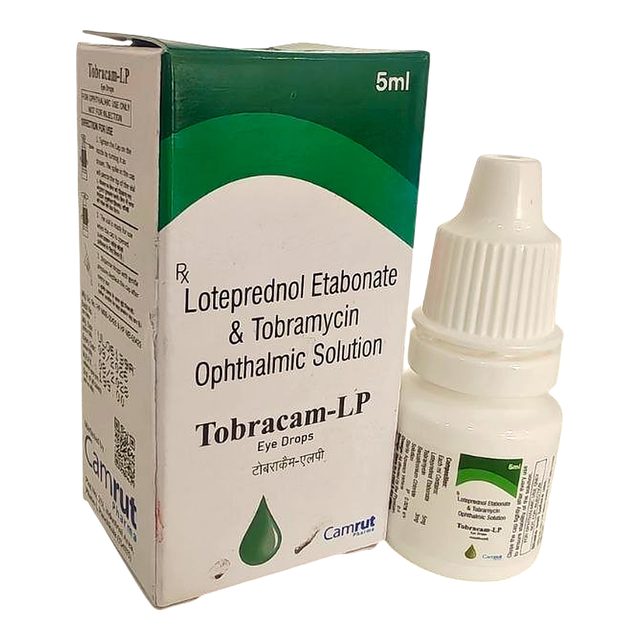
| Composition | Loteprednol Etabonate 0.5% w/v + Tobramycin 0.3% w/v, sterile ophthalmic suspension |
|---|---|
| Dosage Form | Eye Drops (suspension) |
| Pack Type | Dropper vial with carton |
| Pack Size | 5 ml |
| MRP | ₹ 199 |
| Therapy | Ophthalmology – inflammatory eye conditions with bacterial infection or risk of infection — Soft corticosteroid + aminoglycoside antibiotic (topical ophthalmic) |
| Storage | Store below 25 °C, protected from light. Do not freeze. Shake well before use. Discard 4 weeks after opening. Keep out of reach of children. |
📱 WhatsApp Enquiry📞 Call: +919041677932
About TOBRACAM-LP Eye Drops
TOBRACAM-LP Eye Drops combine loteprednol etabonate 0.5% with tobramycin 0.3% in a sterile ophthalmic suspension, supplied in a 5 ml dropper vial with carton. The product is marketed under Trumac Healthcare’s sister brand Camrut and made at WHO-GMP certified partner units for the ophthalmic PCD franchise and wholesale range.
Loteprednol is a ‘soft’ steroid: it controls inflammation like dexamethasone or prednisolone but is inactivated quickly in the eye, so it raises intra-ocular pressure far less often. Combined with tobramycin, which covers Pseudomonas and Staphylococcus, the drop treats inflamed eyes where bacterial infection is present or likely – after cataract and other eye surgery, in blepharokeratoconjunctivitis and in infected allergic eyes.
For eye-care distributors and PCD partners, steroid-antibiotic drops are prescribed by every cataract surgeon, and a loteprednol combination is the modern, lower-risk choice for patients who need steroid for more than a few days. TOBRACAM-LP completes the Trumac tobramycin family alongside TOBRACAM drops and ointment, TOBRACAM-M (with moxifloxacin) and TOBRACAM-F (with fluorometholone).
Trumac offers TOBRACAM-LP on a monopoly PCD pharma franchise for your district, as wholesale stock for distributors, and alongside the full ophthalmic division of more than 40 eye and ear products. Visual aids, product cards and doctor detailing material are provided.
Indications
- Steroid-responsive inflammation of the eyelid and bulbar conjunctiva, cornea and anterior segment where a superficial bacterial infection is present or there is a risk of it
- Inflammation and prevention of infection after cataract surgery and other ocular surgery
- Blepharokeratoconjunctivitis and infected blepharitis
- Chronic anterior uveitis and corneal injury from chemical, radiation or thermal burns, or foreign bodies, when a steroid-antibiotic is advised by the ophthalmologist
Mechanism of Action
Loteprednol etabonate is a corticosteroid designed by retrometabolic drug design: it carries an ester group at the 17-beta position in place of the ketone found in prednisolone and dexamethasone. It binds the glucocorticoid receptor in ocular tissue, switches off the genes for inflammatory cytokines, prostaglandins and leukotrienes and stabilises cell membranes, which reduces redness, swelling, pain and cellular infiltration. After it has acted, ocular esterases hydrolyse it to inactive metabolites, so very little active steroid reaches the trabecular meshwork or the lens; in clinical studies a clinically significant rise in intra-ocular pressure occurred in only about 2 per cent of patients compared with roughly 7 per cent with prednisolone acetate, and cataract formation has not been linked to it. Tobramycin is an aminoglycoside that binds the 30S bacterial ribosome, causes misreading of messenger RNA and kills aerobic Gram-negative bacteria including Pseudomonas aeruginosa, as well as Staphylococcus aureus and S. epidermidis; it prevents or treats the bacterial infection that steroids would otherwise allow to spread. Both drugs act locally; systemic absorption from the eye is negligible.
Dosage & Administration
Adults and children from 1 year, as directed by the ophthalmologist. Shake the bottle well before each use. Usual dose: one or two drops into the conjunctival sac of the affected eye every 4–6 hours; during the first 1–2 days the doctor may increase this to every 1–2 hours. After cataract surgery: typically one drop four times a day starting the day after surgery for 2 weeks, then tapered as advised. The course is reviewed within a week; renewal beyond 14 days needs an eye examination including intra-ocular pressure. Wash hands, tilt the head back, pull the lower lid down and instil the drop without touching the eye with the tip; close the eye and press the inner corner for a minute. Remove contact lenses before use and do not wear them during treatment. Leave 5 minutes between different eye drops.
Side Effects
Common: brief burning or stinging, blurred vision after the drop, feeling of something in the eye, eye redness, itching and watering. Less common: headache, light sensitivity, dry eye, eyelid swelling, bad taste after the drop drains into the nose, and a rise in intra-ocular pressure (less frequent than with other steroids but possible, especially with use beyond 2 weeks). Rare: delayed wound healing, thinning or perforation of the cornea or sclera in diseases that already thin them, posterior subcapsular cataract with prolonged use, secondary fungal or viral infection masked by the steroid (herpes simplex keratitis can worsen), and allergic reaction with marked swelling (stop and seek care).
Contraindications & Precautions
Contraindicated in viral diseases of the cornea and conjunctiva (herpes simplex keratitis, vaccinia, varicella), mycobacterial and fungal infections of the eye, and known hypersensitivity to loteprednol, tobramycin, other aminoglycosides or any component including benzalkonium chloride. Not for use in uncomplicated bacterial conjunctivitis where a steroid is not needed, and not for injection. Use with caution in glaucoma and ocular hypertension (measure pressure if used beyond 10 days), in thin corneas or scleras, after cataract surgery where healing is delayed, and in diabetes. Prolonged use can cause glaucoma, optic nerve damage, cataract and secondary infection; a course beyond 14 days needs an ophthalmologist's review. In pregnancy and breast-feeding use only if the doctor considers it necessary. Safety in children under 1 year is not established. Remove contact lenses before use.
Storage
Store below 25 °C, protected from light. Do not freeze. Shake well before use. Discard 4 weeks after opening. Keep out of reach of children.
TOBRACAM-LP Eye Drops is available for monopoly-based PCD pharma franchise across India and for third-party manufacturing under your brand. WHO-GMP certified, with full visual-aid and promotional support. Become a Trumac franchise partner →
Frequently Asked Questions
Who manufactures loteprednol + tobramycin eye drops in India for PCD franchise?
TOBRACAM-LP Eye Drops (loteprednol etabonate 0.5% + tobramycin 0.3%, 5 ml) are made for Trumac Healthcare's sister brand Camrut at WHO-GMP certified partner units and offered on a PCD pharma franchise with monopoly rights for your district. No franchise fee or deposit; first order from ₹25,000.
What is the pack and MRP of TOBRACAM-LP?
A 5 ml dropper vial with carton, MRP ₹199. Net rates for franchise partners and wholesalers are shared on WhatsApp.
Is loteprednol-tobramycin available for PCD franchise on monopoly basis?
Yes. Trumac appoints one partner per district or defined area for its ophthalmic division, which includes TOBRACAM-LP, moxifloxacin + loteprednol (MOXIRUT-LP), moxifloxacin + dexamethasone and tobramycin + fluorometholone drops.
Can TOBRACAM-LP be supplied on wholesale or distributor basis?
Yes. Distributors and eye-care stockists can buy at net rates without a franchise agreement; dispatch within 48 hours of payment.
How do I start an ophthalmic PCD franchise with Trumac?
Send your district, drug licence number and GST on WhatsApp +91 90416 77932. We confirm availability, share the ophthalmic product list and net rates, and dispatch the first order with visual aids.
What is loteprednol + tobramycin eye drop used for?
Inflamed eyes where bacterial infection is present or likely: after cataract and other eye surgery, infected blepharitis and blepharokeratoconjunctivitis, and other steroid-responsive conditions with infection risk, under an eye doctor's care.
Why loteprednol instead of dexamethasone or prednisolone?
Loteprednol is inactivated by enzymes in the eye after it works, so it raises eye pressure in far fewer patients and has not been linked to cataract. It is the preferred steroid when a course may last more than a few days.
How often is TOBRACAM-LP used?
Usually one or two drops every 4–6 hours, more often in the first day or two if the doctor advises; after cataract surgery typically four times a day for 2 weeks, then tapered. Shake the bottle before each use.
Does TOBRACAM-LP raise eye pressure?
Rarely, and less than other steroid drops, but pressure should be checked if the drop is used for more than 10–14 days.
Can contact lenses be worn with TOBRACAM-LP?
No. Lenses should not be worn during treatment of an inflamed or infected eye, and the preservative can be absorbed by soft lenses.
Can children use TOBRACAM-LP?
Yes, from 1 year of age, at the dose the ophthalmologist prescribes.
Which other steroid-antibiotic eye drops does Trumac offer for franchise?
Moxifloxacin + loteprednol (MOXIRUT-LP), moxifloxacin + dexamethasone (MOXIRUT-D), moxifloxacin + difluprednate (MOXIRUT-DF), moxifloxacin + prednisolone (MOXIRUT-P), tobramycin + fluorometholone (TOBRACAM-F) and chloramphenicol + dexamethasone ointments, all available to franchise partners alongside TOBRACAM-LP.
Also in this range: LOTEWISE Eye Drops – loteprednol 0.5% alone, without the antibiotic. Available to the same PCD franchise partners and wholesalers; ask for the combined net-rate list on WhatsApp +91 90416 77932.
Part of the Trumac Healthcare Eye drops list (52 products) – every ophthalmic product with pack and MRP, all available on monopoly PCD franchise and wholesale supply.